Circular Textile Supply Chain Traceability & Chemical Testing
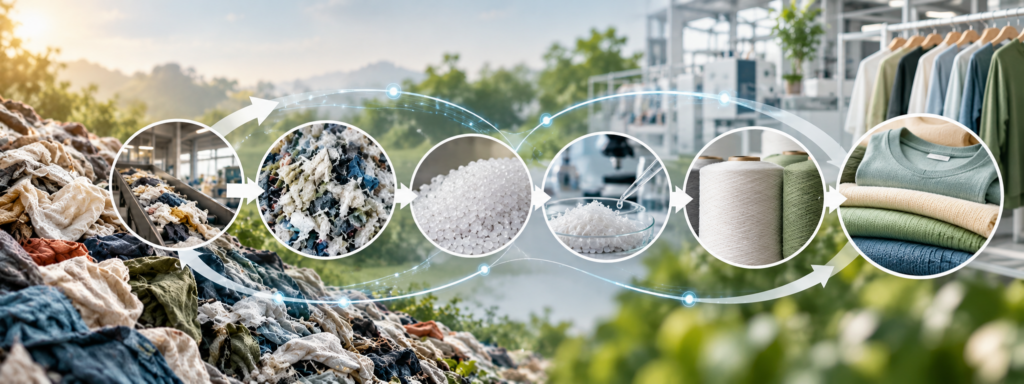
Discover why traceability, chemical testing and reliable material data matter in circular textile supply chains. The textile industry is working towards a more circular future, where materials remain in use for longer and waste can become a resource for new products. Recycling plays an important role in this transition, but turning discarded textiles into usable […]
全新ZDHC InCheck工作流如何运作?供应商须知
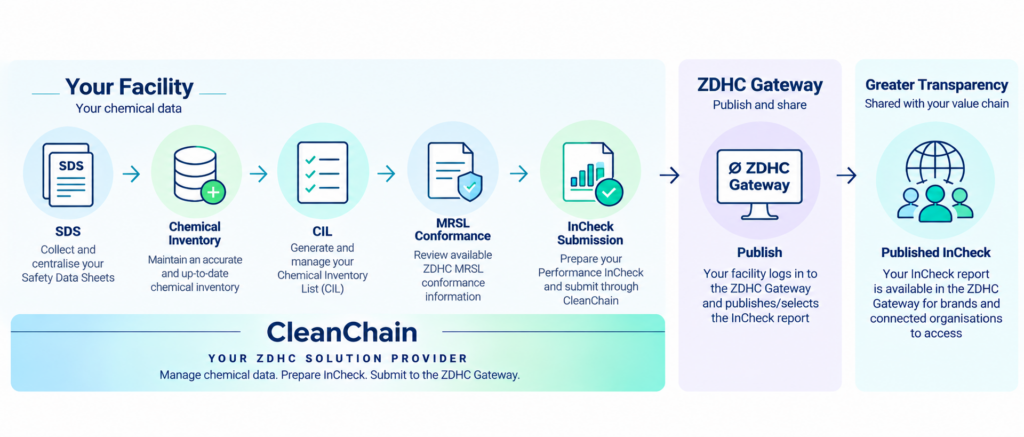
ZDHC网关已完成升级,随之更新的还有ZDHC InCheck工作流,用于供应商管理并发布月度ZDHC Performance InCheck Reports。 对供应商而言,核心变化很明确:供应商在解决方案服务商平台上传数据,报告提交至ZDHC Gateway平台,并由供应商手动发布报告。 熟悉新流程,并在整月内维护好化学品库存数据,能够提升Performance InCheck报告的符合率。 ZDHC Performance InCheck发生了哪些变化? 在全新ZDHC InCheck工作流下,供应商在服务商平台上传化学品数据后,需要自行登录Gateway手动发布报告,否则无法生成InCheck报告。完成报告发布后,用户可以在Gateway或者服务商平台下载PDF InCheck报告。 全新ZDHC InCheck工作流如何运作? 整个流程可以理解为一条连贯的化学品数据流转链路: SDS → 化学品库存 → CIL → InCheck → ZDHC网关 每个环节都会影响下一环节的质量与效率。 安全技术说明书提供供应商所用化学品的重要信息。 保持安全技术说明书信息的时效性与规范性,可为化学品库存管理和上报工作打下更坚实的基础。 化学品库存记录供应商正在使用或已送达的各类化学品。 在整月内持续维护该信息,可减少申报月度InCheck报告时的工作量。 结构化的化学品库存数据可用于生成化学品库存清单(CIL),助力供应商整理化学品信息,并监控是否符合 ZDHC 生产限用物质清单(MRSL)要求。 月度化学品库存数据用于生成InCheck报告,直观展示库存内化学品是否满足 ZDHC 生产限用物质清单合规要求。 合作解决方案服务商Solution Provider将InCheck报告提交至 ZDHC 平台,由供应商在平台上完成所需的发布流程。 供应商需要了解哪些月度上报相关事项? InCheck申报以自然月化学品库存为基础,通常情况下供应商在当月申报上个月的清单。比如正值9月,则申报的数据为8月的化学品信息。 Gateway网关重新发布后,供应商每月只能生成一份InCheck报告。供应商需要确认品牌客户的要求,再决定申报使用量清单,还是交付量清单。 CleanChain用户在填报CIL模板时,可以选择使用ZDHC PID或者Product Reference ID。建议优先使用新的产品ID,即Product Reference ID。 InCheck报告的申报窗口期为45天。2026年过渡期间,窗口期延长至90天。 如果供应商对接了多家InCheck解决方案服务商怎么办? 供应商可以对接多家解决方案服务商,但同一个供应商、同一个上报月份,最终仅能有一份InCheck报告在 ZDHC […]
How Digital Supply Chain Technology Improves Labour Rights Visibility
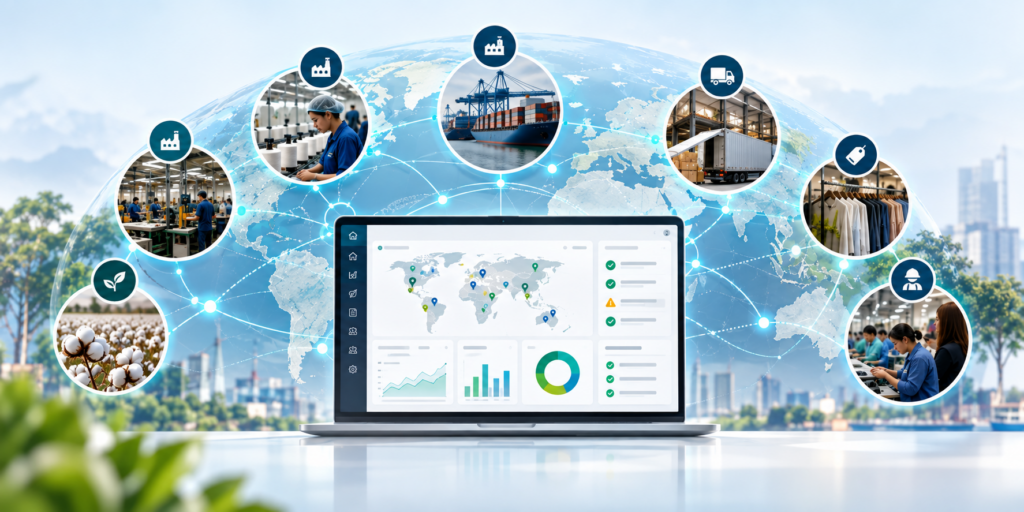
Discover how digital supply chain technology improves labour rights visibility, connects supplier data and supports responsible sourcing. Labour rights risks can exist across multiple tiers of global supply chains, where fragmented supplier data makes potential issues difficult to identify. Digital supply chain technology can help organisations connect supplier, facility and compliance information, improve visibility beyond […]
The New ZDHC InCheck Workflow: What Suppliers Need to Know
How does the new ZDHC InCheck workflow work? What suppliers need to know. The ZDHC Gateway has changed, and with it comes an updated ZDHC Incheck workflow for how facilities manage and publish their monthly ZDHC Performance InCheck Reports. For suppliers, the key change is simple: your connected Solution Provider now plays a central role […]
What 15,000 Safety Data Sheets Reveal About Chemical Data Quality and Supply Chain Visibility

Discover what an analysis of 15,000 Safety Data Sheets reveals about chemical data quality and supply chain visibility for textile brands. For textile and apparel brands, advancing safer chemistry is not simply a matter of adding more substances to restricted lists or introducing more compliance requirements. It starts with something more fundamental: knowing what chemicals […]
Food Service Sustainability Software: Turn Environmental Goals Into Measurable Action

Discover how food service sustainability software helps restaurants and operators track carbon emissions, food waste and water usage. Food Service Sustainability Software: Turn Environmental Goals Into Measurable Action Food service sustainability software has become an increasingly important consideration across the UK. From reducing food waste and carbon emissions to improving energy and water efficiency, restaurants, […]
Europe Is Raising the Bar for Chemical Safety in Toys: What Manufacturers Need to Know

Europe’s new Toy Safety Regulation strengthens chemical safety requirements for toys. Learn what is changing and why manufacturers should prepare before 2030. EU Toy Safety Regulation: New Chemical Requirements Explained The EU Toy Safety Regulation (EU) 2025/2509 strengthens the existing regulatory framework and expands the focus beyond traditional carcinogenic, mutagenic and reprotoxic (CMR) substances to […]
Labour Rights in Supply Chains: Why Visibility Matters

Labour rights in supply chains are becoming a priority. Explore the risks of forced and child labour, and why better data and visibility matter. Forced labour and child labour remain deeply embedded in global supply chains. As regulation tightens, companies are facing a new question: can they actually see where labour risks exist? The numbers […]
REACH Regulation: Understanding EU Chemical Compliance
REACH Regulation FAQ: Understanding EU Chemical Compliance What is REACH Regulation? REACH stands for Registration, Evaluation, Authorisation and Restriction of Chemicals. It is the European Union regulation designed to protect human health and the environment from the risks associated with chemicals. REACH Regulation applies to chemical substances used on their own, in mixtures and, in […]
UK Food Service: Sustainability Moves to the Top of the Menu

Learn how UK food service businesses are reducing food waste, lowering carbon emissions and using data to improve sustainability. Across the UK’s food service sector, rising food costs, tighter margins and changing customer expectations are prompting operators to rethink how they source ingredients, manage waste and measure environmental performance. What was once considered a corporate […]