Discover how digital supply chain technology improves labour rights visibility, connects supplier data and supports responsible sourcing.
Labour rights risks can exist across multiple tiers of global supply chains, where fragmented supplier data makes potential issues difficult to identify. Digital supply chain technology can help organisations connect supplier, facility and compliance information, improve visibility beyond Tier 1 and identify areas that may require further investigation.
CleanChain brings supplier, compliance and sustainability data into a connected digital platform, helping organisations turn complex supply chain information into actionable insight.
For organisations strengthening responsible sourcing and human rights due diligence, the objective is not simply to collect more data. It is to make that data visible, connected and useful enough to support action.
At a glance, technology can help organisations:
- Centralise supplier and compliance data
- Improve multi-tier supply chain visibility
- Identify information and compliance gaps
- Monitor supplier performance
- Analyse trends across suppliers and regions
- Support human rights due diligence
- Maintain accessible information for evolving regulatory requirements
Technology does not replace audits, worker engagement, investigations or remediation. It provides the digital infrastructure that helps these processes operate with better information.
How Can Digital Supply Chain Technology Improve Visibility and Help Identify Labour Rights Risks?
Digital supply chain technology can improve labour rights visibility by connecting supplier, facility and compliance data across multiple tiers, helping organisations identify information gaps, potential risk indicators and areas requiring further investigation.
Labour rights are fundamentally a human issue. Managing potential labour rights risks across large supplier networks, however, also presents a significant data and visibility challenge.
Organisations may hold information across supplier questionnaires, audit reports, spreadsheets, emails, facility records, corrective action plans and separate compliance systems. The challenge is often not that information does not exist. It is that the information is fragmented.
One team may maintain supplier records. Another may oversee social compliance. Audit findings may be stored elsewhere, while corrective actions are tracked through spreadsheets or separate systems.
That fragmentation makes seemingly simple questions harder to answer:
- Which facilities form part of the extended supplier network?
- Where are the visibility gaps?
- Which suppliers have outstanding requirements?
- Where have potential concerns been identified?
- Have corrective actions been completed?
- Which suppliers, facilities or regions require further attention?
Connecting these data points can help transform isolated records into usable supply chain intelligence.
How to Improve Visibility Beyond Tier 1 Suppliers
Improving visibility beyond Tier 1 starts with understanding the relationships between suppliers, facilities, subcontractors and other organisations involved in production.
A company may have detailed information about its direct suppliers while knowing considerably less about upstream facilities, raw-material suppliers, subcontractors or labour providers.
This creates potential blind spots. Products and materials may pass through numerous organisations and locations before reaching their final destination. Each additional tier can introduce more relationships, more information and greater complexity.
This is where multi-tier digital supply chain technology becomes valuable.
By connecting supplier and facility information across a network, organisations can develop a clearer picture of where visibility exists, where information is incomplete and where additional due diligence may be appropriate.
Greater visibility does not automatically eliminate labour rights risk. It gives organisations better information for deciding where to look more closely and where action may be needed.
From Periodic Audits to Connected Supply Chain Intelligence
Audits and supplier assessments remain important components of responsible sourcing, but they generally provide a snapshot of conditions at a particular point in time. Supply chains continue to change between assessments.
Suppliers change. Production moves. Documentation expires. Corrective actions progress. New facilities enter networks. New risks can emerge.
Digital supply chain technology tools for responsible sourcing and human rights due diligence can complement traditional assessments by helping organisations maintain a more continuous view of relevant supplier and compliance information.
Centralise Supplier and Compliance Data
Instead of relying on multiple spreadsheets, emails and disconnected databases, organisations can bring supplier and compliance information into a connected digital environment. Centralisation can make information easier to find, compare, manage and report.
Connect Suppliers, Facilities and Compliance Information
The value of supply chain data increases when relationships between individual records become visible.
Organisations can better understand which facilities connect to which suppliers, where information is missing, what requirements remain outstanding and where potential issues have been identified.
Monitor Supplier Performance Over Time
Responsible sourcing should not be treated as a one-time data collection exercise. Digital supply chain technology can help teams monitor supplier information and performance over time, providing greater continuity between assessments and supporting ongoing compliance programmes.
Turn Data Into Actionable Insights
Large supply chains generate significant amounts of information. Dashboards, reporting and analytics can make that information easier to interpret, helping teams identify patterns and direct attention toward areas that may require further review.
Digital Supply Chain Technology for Complex Supplier Networks
As supplier networks expand, managing compliance through disconnected systems becomes increasingly difficult.
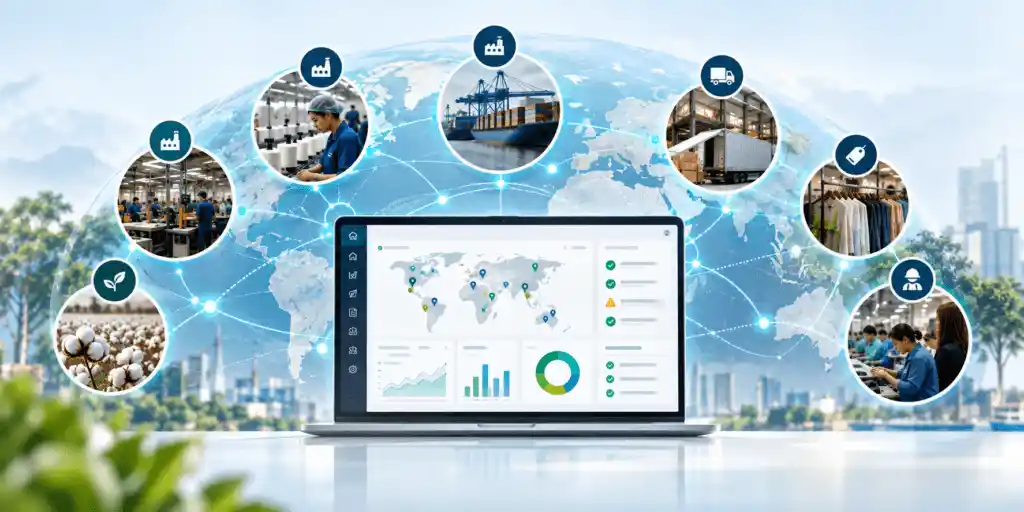
Digital supply chain technology can help organisations manage complex supplier networks by centralising data, connecting suppliers and facilities, monitoring compliance information and providing greater visibility across multiple tiers. A connected platform can support activities such as supplier and facility mapping, compliance monitoring, performance analysis, corrective-action tracking and reporting.
The objective is not simply digitisation. Replacing a spreadsheet with another isolated digital tool does not necessarily solve the underlying visibility problem.
The greater opportunity is to create a connected source of supply chain information that can support decision-making across compliance, sustainability and responsible sourcing teams.
How CleanChain Supports Multi-Tier Supply Chain Visibility and Supplier Compliance
CleanChain provides digital supply chain technology that centralises supplier, compliance and sustainability information, helping organisations improve multi-tier visibility and turn complex data into actionable insights.
For organisations looking for technology to manage supplier compliance across complex global networks, connectivity is particularly important. Instead of treating suppliers, facilities and compliance information as isolated records, CleanChain provides a digital environment where relevant information can be brought together.
One Connected Source of Supply Chain Information
CleanChain helps organisations reduce reliance on fragmented spreadsheets and disconnected systems by centralising relevant supply chain information. Teams can access a more consistent view of supplier, compliance and sustainability data, supporting collaboration, reporting and decision-making.
Multi-Tier Supply Chain Visibility
CleanChain helps organisations gain a clearer view of suppliers and facilities across multiple tiers.
This supports organisations seeking to improve visibility beyond Tier 1 suppliers, understand relationships within extended networks and identify where data gaps or potential risks may require attention.
Supplier Compliance Monitoring
Responsible sourcing requires more than maintaining a list of suppliers. Connected supplier and compliance information can help teams monitor requirements, identify gaps and maintain greater oversight of performance across complex networks.
Dashboards, Reporting and Business Intelligence
Collecting data has limited value if organisations cannot interpret it.
CleanChain’s configurable dashboards and reporting capabilities help transform complex supply chain information into meaningful insights, enabling organisations to compare performance and provide stakeholders with greater visibility.
Digital Supply Chain Technology for Complex Supply Chains
Every supply chain operates differently. Supplier structures, regions, workflows, sustainability objectives and compliance requirements can vary considerably between organisations.
Configurable technology enables organisations to build digital processes around their operational requirements rather than relying entirely on rigid, one-size-fits-all workflows.
A Technology-Enabled Framework for Labour Rights Risk Management
Technology delivers the most value when it supports a clearly defined due diligence process.
A practical approach can be structured around five connected stages:
1. Identify
Map relevant suppliers and facilities and determine where visibility currently exists. Digital supply chain technology can help centralise this information and create a more structured view of the supplier network.
2. Assess
Review available supplier, facility and compliance information to understand where potential labour rights risks or information gaps may exist.
3. Prioritise
Use connected data to identify patterns and areas requiring greater attention so that resources can be directed more effectively.
4. Act
Where concerns arise, organisations can engage suppliers, conduct further assessments, investigate potential issues and implement corrective or remediation measures where appropriate.
Technology supports this process. Responsible action remains human-led.
5. Monitor
Track relevant supplier information, outstanding requirements and corrective actions over time.
Together, these stages create an ongoing cycle:
Identify → Assess → Prioritise → Act → Monitor
Technology provides the connected digital infrastructure supporting each stage.
Technology for Forced Labour Supply Chain Compliance and Due Diligence
Regulatory developments are increasing the importance of understanding where products originate, which suppliers and facilities are involved and what information organisations hold about their supply chains.
The EU Forced Labour Regulation will apply from 14 December 2027, prohibiting products made with forced labour from being placed or made available on the EU market or exported from the EU. This makes technology for forced labour supply chain compliance and due diligence increasingly relevant to organisations operating in or supplying European markets.
Technology cannot determine by itself whether forced labour exists. What it can do is help organisations structure supplier information, improve visibility, identify data gaps and make relevant records easier to retrieve when questions or investigations arise.
How to Prepare Supply Chain Data for the EU Forced Labour Regulation
Preparation starts with understanding the supply chain. Organisations can strengthen their data foundations by mapping relevant suppliers and facilities, centralising information, improving traceability and making due diligence records easier to retrieve.
Connected supply chain technology can support this process by helping businesses move from fragmented information toward a more structured view of their supplier networks. This matters because regulatory readiness is not simply about producing a report. It is about being able to understand, access and use relevant supply chain information when it is needed.
Can Technology Replace Supplier Audits and Human Rights Due Diligence?
No. Technology cannot replace supplier audits, worker engagement, investigations, remediation or human judgement. Its role is to make relevant information more visible, structured and actionable. A dashboard cannot determine the lived experience of workers.
A supplier score cannot, by itself, establish that acceptable working conditions exist. And the absence of a digital risk indicator does not prove that labour rights concerns are absent. Effective responsible sourcing therefore combines technology, reliable data and human expertise.
Digital supply chain technology can organise information and surface patterns. Audits and assessments can examine conditions. Workers and stakeholders can provide essential context. Specialists can investigate concerns. Organisations can then determine appropriate actions and remediation. The strongest approach connects these capabilities rather than treating any one of them as a complete solution.
From Supply Chain Visibility to Responsible Action
The goal of supply chain visibility is not more data.
It is better-informed action.
Organisations need to move beyond asking:
“Do we have supplier data?”
and toward:
“Can we use our supplier data to understand where attention and action may be needed?”
That distinction is becoming increasingly important as supplier networks become more complex and expectations around responsible sourcing, transparency and regulatory compliance continue to evolve.
Connected technology can help organisations understand their networks more clearly, identify gaps and transform large volumes of information into insights that support responsible decision-making.
FAQs About Digital Supply Chain Technology and Labour Rights
How can technology help identify labour rights risks in supply chains?
Technology can centralise supplier information, improve multi-tier visibility, monitor compliance information and highlight gaps or patterns requiring further investigation. It supports risk identification but does not replace worker engagement, assessments, investigations or human judgement.
How can organisations improve visibility beyond Tier 1 suppliers?
Organisations can improve visibility beyond Tier 1 by mapping supplier and facility relationships, collecting information from deeper tiers and using connected technology to centralise and analyse that information.
How do businesses monitor supplier compliance across multiple tiers?
Businesses can combine supplier mapping, assessments, compliance information, supplier engagement and multi-tier visibility technology to develop a more complete view of supplier performance.
How can technology support human rights due diligence?
Technology can support human rights due diligence by organising supplier information, improving visibility, highlighting potential data gaps and making relevant evidence easier to access and analyse. Human investigation, stakeholder engagement and remediation remain essential.
Can technology prevent forced labour in supply chains?
Technology alone cannot prevent forced labour. It can improve visibility, help organise relevant evidence and identify potential risk indicators or information gaps that require investigation. Prevention requires effective due diligence, supplier engagement, worker protections and appropriate remediation.
How does CleanChain improve multi-tier supply chain visibility?
CleanChain centralises supplier, compliance and sustainability information within a connected digital platform. This helps organisations gain greater visibility across suppliers and facilities, identify data gaps and transform complex supply chain information into actionable insights.
See how CleanChain can help your organisation turn supply chain complexity into clarity. cleanchaininfo@adec-innovations.com