Simplify Textile Supply Chain Compliance with Compass
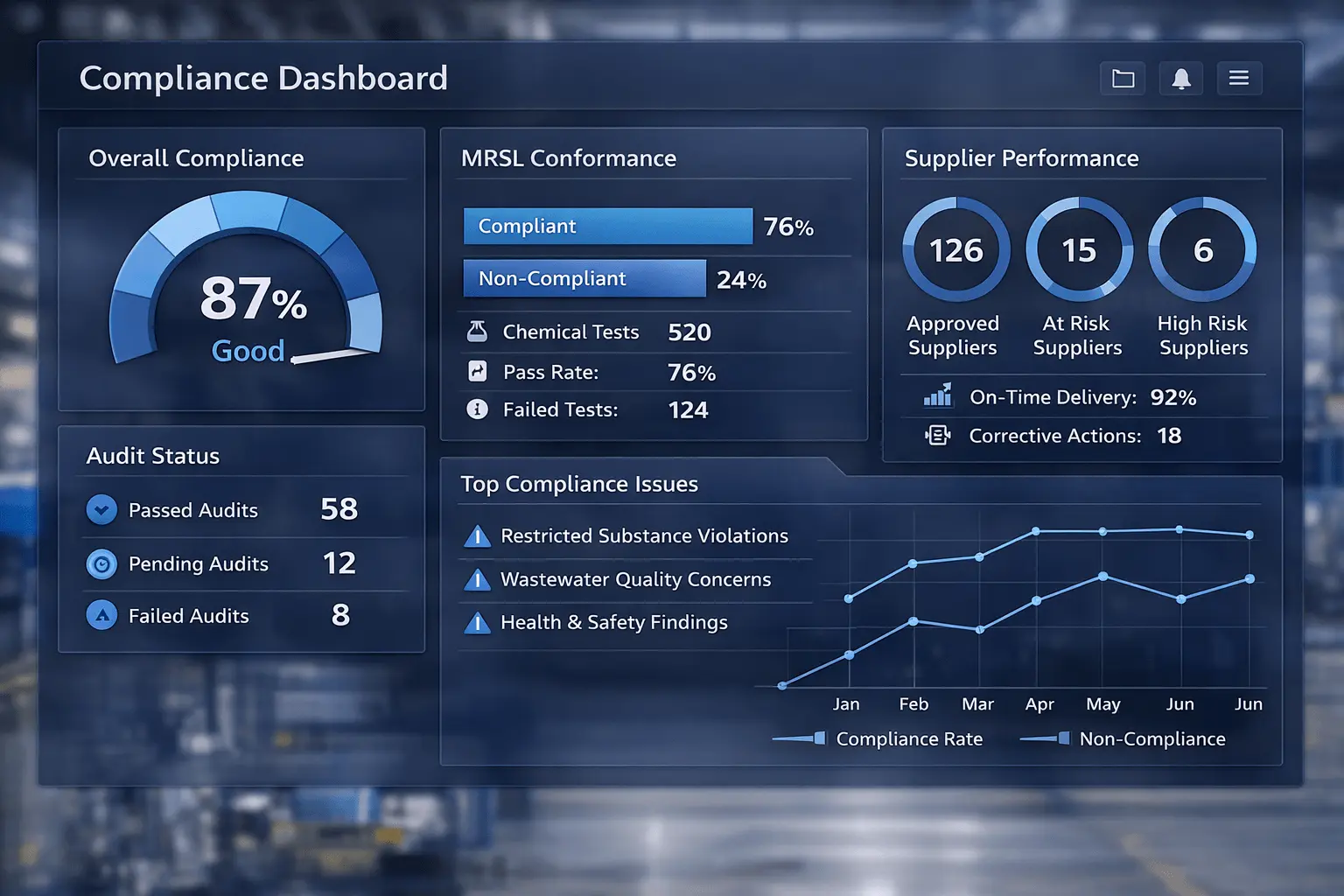
CleanChain Compass is compliance software for textile brands to help them manage supplier chemical compliance across complex, multi-tier supply chain. Centralise supplier data, monitor ZDHC MRSL conformance, consolidate InCheck and wastewater reporting, and identify compliance gaps from one connected platform.
Instead of relying on disconnected spreadsheets and manual supplier reporting, Compass transforms complex chemical and sustainability data into clear, audit-ready insights. Brands gain greater visibility beyond Tier 1, enabling compliance teams to identify high-risk suppliers, improve performance and demonstrate measurable progress against ZDHC requirements.
As textile regulation evolves, Compass also helps brands build the structured, verifiable supply-chain data needed to prepare for requirements such as Digital Product Passports.
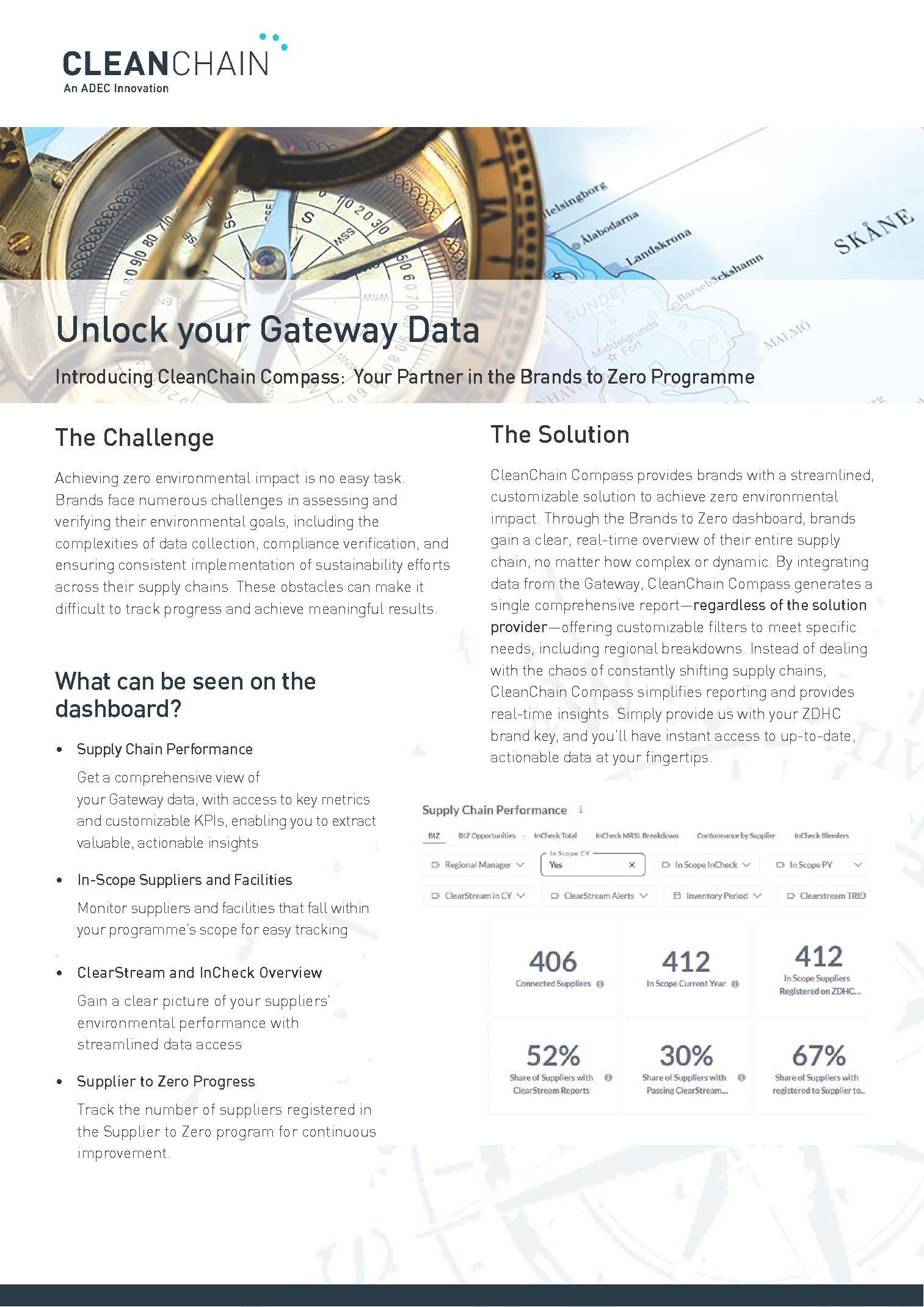
CleanChain Compass brings supplier, chemical and compliance data together in one connected platform, giving textile and apparel brands greater visibility across complex supply chains. From ZDHC MRSL conformance to InCheck and wastewater reporting, Compass helps compliance teams reduce manual processes, identify gaps and focus improvement efforts where they matter most.
Bring supplier compliance information together in one place instead of managing disconnected spreadsheets, reports and data sources. Compass creates a clearer, more consistent view of supplier performance, helping teams spend less time gathering information and more time using it to drive compliance improvements.
Gain greater visibility into chemical performance and ZDHC MRSL conformance across your supplier network. Compass helps teams monitor relevant compliance data, identify gaps and understand where additional supplier engagement may be needed, supporting a more proactive approach to chemical management.
Bring ZDHC InCheck and wastewater reporting data into a centralised view to simplify ongoing performance monitoring. By reducing fragmented reporting and manual data consolidation, Compass helps compliance teams identify trends, compare supplier performance and turn complex reporting data into actionable insights.
Extend visibility beyond Tier 1 to build a clearer picture of compliance performance across your wider textile supply chain. Compass helps teams identify higher-risk suppliers and potential compliance gaps, prioritise corrective actions and engage suppliers more effectively to support continuous improvement.

Textile brands can bring together relevant supplier, chemical and compliance information to build a more structured view of their supply chain. This may include supplier and facility information, chemical inventory and conformance data, and ZDHC-related performance data such as InCheck and wastewater reporting.
Compass helps bring existing supplier and compliance information into a more centralised environment, reducing reliance on fragmented spreadsheets and disconnected data sources. This creates a more consistent view of supplier performance and makes compliance information easier to monitor, analyse and use for decision-making.
Compass creates a shared view of supplier and compliance performance, helping sustainability, responsible sourcing, technical and supply chain teams work from more consistent information.
Spreadsheets can become difficult to maintain as supplier networks and compliance requirements grow. Compass brings suppliers and information into a connected platform, reducing fragmented reporting and making it easier to monitor performance, identify gaps and prioritise action.
Discover how John Lewis & Partners uses CleanChain Compass to centralise supplier data, improve textile supply chain visibility and streamline chemical compliance. With clearer insights into chemical usage, MRSL conformance and supplier performance, teams can reduce manual administration and focus on strategic sustainability and compliance priorities.
By connecting chemical compliance information with supplier data, Compass helps brands move away from fragmented spreadsheets and disconnected reporting. Greater visibility enables teams to trace relevant information across the supply chain, maintain more consistent compliance records and build a stronger data foundation for evolving Digital Product Passport requirements.
For brands, this means DPP preparation becomes part of a broader approach to supply chain transparency and compliance, not another isolated data challenge.