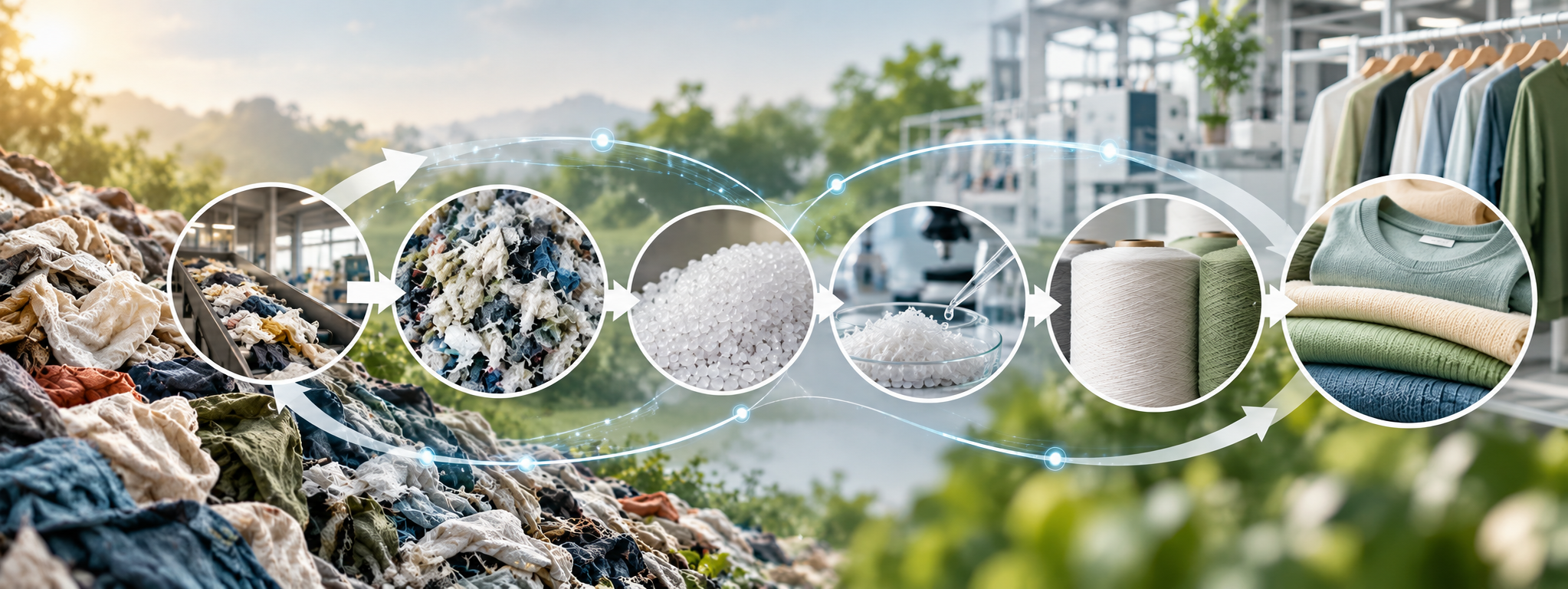
Discover why traceability, chemical testing and reliable material data matter in circular textile supply chains.
The textile industry is working towards a more circular future, where materials remain in use for longer and waste can become a resource for new products. Recycling plays an important role in this transition, but turning discarded textiles into usable materials is only part of the challenge.
Brands and manufacturers also need to understand where recycled materials come from, how they have been processed and what chemical risks may need to be assessed before they return to production.
This is where circular textile supply chain traceability, chemical management and laboratory testing become essential.
Together, they help organisations make more informed decisions about recycled materials and build greater confidence in circular supply chains.
The challenge of tracing recycled textiles
Unlike virgin materials, recycled textile inputs may come from multiple sources, including post-consumer garments, manufacturing offcuts and collected textile waste.
These materials can differ in fibre composition, dyes, finishes and chemical treatment history. As materials are collected, sorted, processed and transformed into new feedstock, maintaining a clear record of their journey can become increasingly complex.
For apparel brands and manufacturers, important questions include:
- Where did the recycled material originate?
- How was it sorted and processed?
- Which material batches were tested?
- What supporting documentation is available?
- How is the material connected to subsequent manufacturing stages?
Without reliable information, it becomes harder to assess material suitability, investigate potential issues or support claims about recycled content and responsible sourcing.
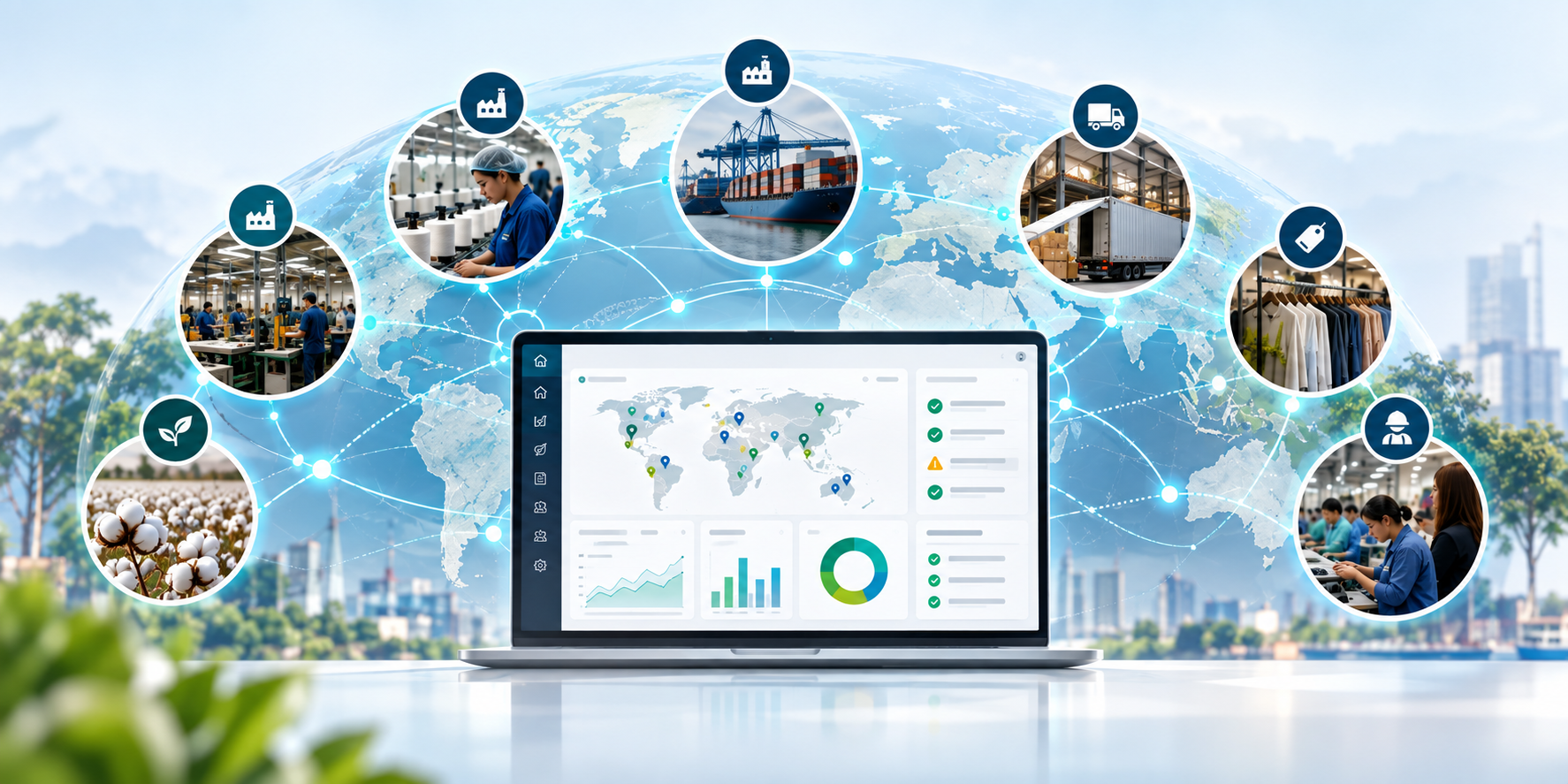
Traceability helps connect material information across the supply chain, creating a clearer picture of how recycled inputs move towards new products.
Why chemical testing matters for recycled materials
Recycled materials can carry chemical substances from their previous use or from earlier manufacturing processes.
For example, post-consumer textiles may contain dyes, finishing agents, coatings or other substances introduced during the original product’s lifecycle. Recycling processes may also introduce new chemicals or create additional considerations for material assessment.
This means that recycled content alone does not establish whether a material meets applicable chemical requirements.
Chemical testing helps organisations evaluate potential risks and assess whether materials meet relevant specifications or restricted substance requirements.
Depending on the material, intended application and applicable requirements, laboratory testing may help identify or assess substances of concern.
Testing should be risk-based and supported by appropriate sampling, documented methods and interpretation of results. A test result represents the tested sample and does not automatically guarantee that every material in a supply chain is free from restricted substances.
Understanding restricted substances in circular textile supply chain
Restricted substances are chemicals subject to limitations under regulations, customer requirements or industry programmes.
In textile supply chains, organisations may need to consider both chemical inputs used during manufacturing and substances that could remain in finished materials or products.
These are related but distinct areas of chemical management.
A Manufacturing Restricted Substances List (MRSL) addresses chemical formulations used in manufacturing processes, while a Restricted Substances List (RSL) generally addresses substances restricted in finished products or materials.
For a circular textile supply chain, this distinction is particularly important because recycled materials may have an incomplete chemical history.
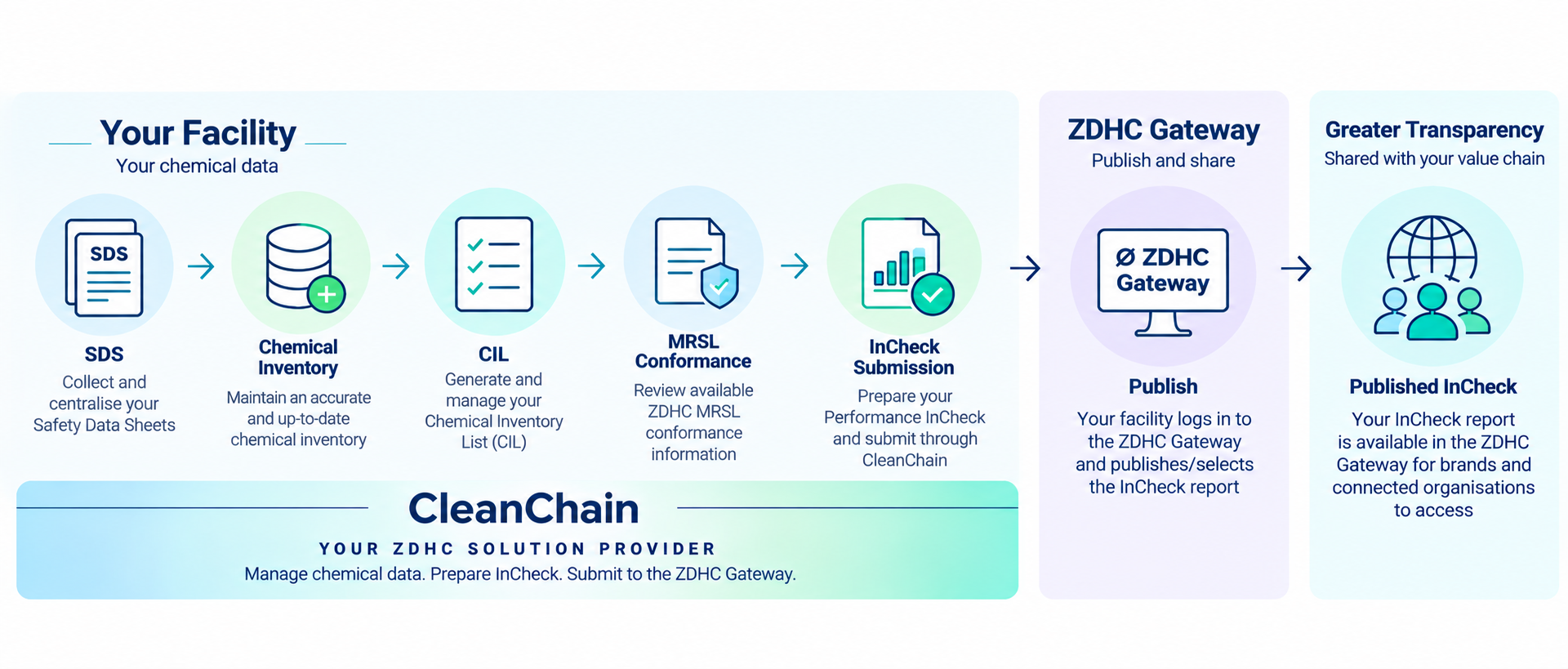
An effective approach can include supplier information, material specifications, relevant chemical inventory records, risk assessment, and, where appropriate, laboratory testing.
The objective is not simply to collect test reports, but to ensure relevant chemical information supports decisions as materials move through the supply chain.
CleanChain as the Digital Traceability Layer
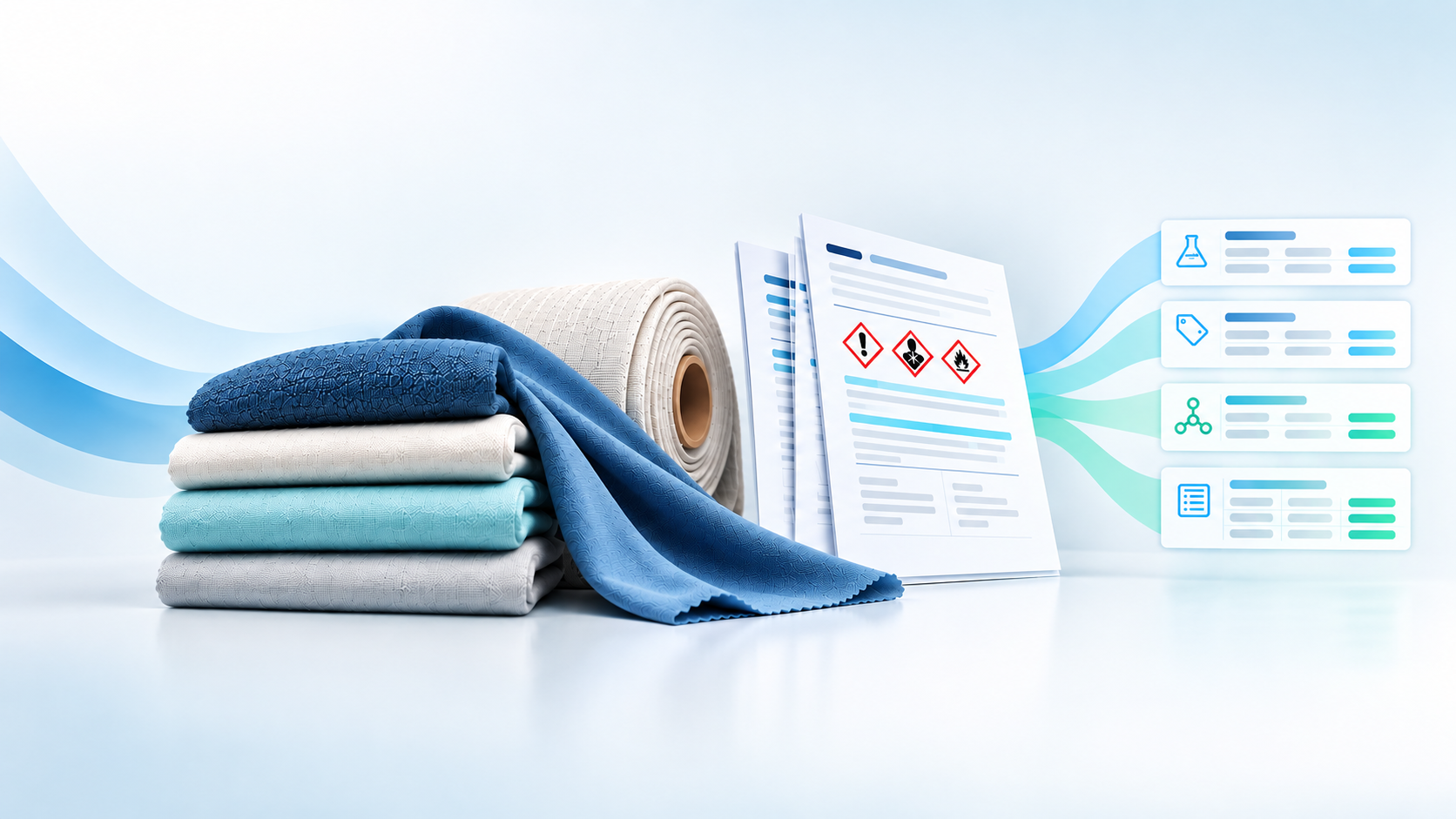
Connecting relevant material, batch testing, chemical management and supporting documentation across stages
Each stage generates information that can be useful to organisations further along the supply chain.
However, this information may be stored in separate systems, documents or supplier records. When records cannot be connected to relevant materials and batches, it becomes more difficult to understand the complete journey.
A digital traceability approach helps bring these information sources together, improving visibility without replacing the physical processes of sorting, recycling, testing or manufacturing.
How CleanChain supports circular textile supply chain traceability
Building circular supply chains requires more than material movement. It also requires information that can move with those materials.
CleanChain supports this need by helping organisations connect relevant recycled material information, batch testing, chemical management data and supporting documentation across key supply chain stages.
This digital approach can help apparel brands, manufacturers and supply chain partners:
- Improve visibility into available recycled material and batch information.
- Connect relevant laboratory testing records with material documentation.
- Support chemical management workflows and more informed material decisions.
- Make supporting information easier to access and review.
- Strengthen collaboration across circular supply chain activities.
CleanChain acts as a digital information layer, helping connect records and workflows. It does not replace laboratory testing, regulatory assessments or independent certification where these are required.
Explore CleanChain’s Circular Textile Supply Chain Solutions
Building confidence in circularity
Circularity depends on more than the ability to recycle materials. It also depends on whether organisations can access and understand the information needed to use those materials responsibly.
As textile supply chains incorporate more recycled inputs, the ability to connect material origins, processing records, chemical information and laboratory testing will become increasingly important.
By combining traceability with appropriate testing and chemical management, organisations can build a stronger information foundation for circular sourcing and manufacturing.
The future of circular textiles is not only about moving materials forward. It is also about keeping relevant information connected throughout the journey.
Take the next step towards traceable circularity
Discover how CleanChain helps connect recycled material information, batch testing, chemical management and supply chain data to support greater visibility across circular textile supply chains.
Explore Circular Supply Chain Traceability cleanchaininfo@adec-innovations.com