Labour rights in supply chains are becoming a priority. Explore the risks of forced and child labour, and why better data and visibility matter.
Forced labour and child labour remain deeply embedded in global supply chains. As regulation tightens, companies are facing a new question: can they actually see where labour risks exist?
The numbers are difficult to ignore.
An estimated 27.6 million people are trapped in forced labour globally, according to the International Labour Organisation (ILO). More than 3.3 million are children.
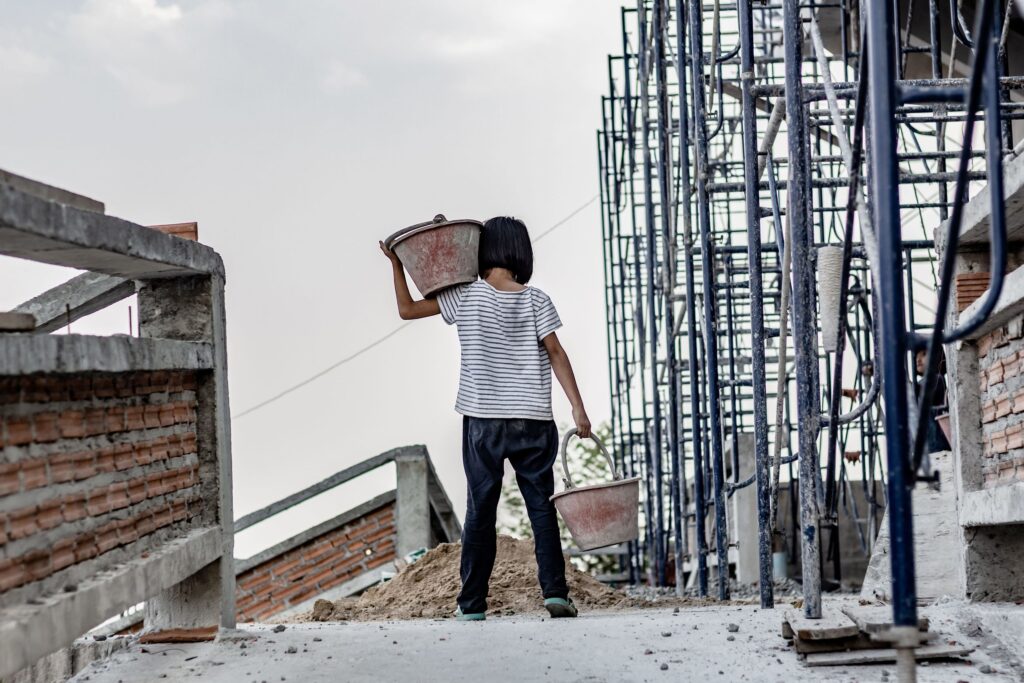
Child labour presents another enormous challenge. The latest ILO-UNICEF estimates found that 138 million children were engaged in child labour in 2024, including around 54 million in hazardous work.
There has been progress. The number of children in child labour fell by more than 22 million between 2020 and 2024. But the world still missed its target of eliminating child labour by 2025.
For companies sourcing products and materials across multiple countries and tiers, the issue is increasingly difficult to treat as someone else’s problem.
How can companies identify labour rights risks in their supply chain?
Labour Rights in Supply Chains
The European Union is putting supply-chain labour practices firmly on the business agenda.
From 14 December 2027, the EU Forced Labour Regulation will prohibit products made with forced labour from being placed on, made available on or exported from the EU market. The regulation applies regardless of where the forced labour occurs and regardless of the product’s origin.
The European Commission has already launched its preparedness package, including guidelines, a risk database and traceability tools to help companies prepare.
The message is clear: preparation starts before enforcement. This doesn’t mean companies suddenly need another report. It means they need better visibility.
Your Tier 1 supplier may not tell the whole story
For many businesses, supply-chain visibility still ends with their direct suppliers. But production rarely works that neatly. A supplier may use subcontractors. A manufacturer may rely on labour agencies. Raw materials may come from another country. Temporary or migrant workers may be recruited through third parties. Further down the chain, the company buying the finished product may have little visibility into who actually made it. That creates a significant risk gap.
A supplier can have a signed code of conduct and still have problems elsewhere in its operations or supply network. Audits provide a snapshot. Data provides a bigger picture.
Supplier audits remain an important part of responsible sourcing. But an audit is a point-in-time assessment. Supply chains are constantly changing. Suppliers change. Production moves. Workers change. Subcontractors are added. New materials are sourced. That means companies need more than a collection of audit reports sitting in different folders. They need to connect the information.
Supplier records, assessments, compliance documents, corrective actions, certifications, sites and other relevant evidence need to be accessible and traceable. The goal isn’t simply to collect more data. It’s to make the data useful.
From statements to evidence – labour rights in supply chains
For years, businesses have published modern slavery statements and supplier policies outlining their commitment to responsible sourcing.
But the questions facing companies are becoming more practical.
- Where are your highest-risk suppliers?
- Which sites have outstanding issues?
- Are subcontractors visible?
- What corrective actions have been raised?
- Who is responsible for resolving them?
- Can you demonstrate what has changed?
These questions require information that is current, connected and accessible. And increasingly, they require organisations to look beyond Tier 1.
The role of better labour rights in supply chains data
Labour-rights management is ultimately about people. Technology cannot replace worker engagement, independent investigations, remediation or meaningful due diligence. But better data can help organisations identify where attention is needed.
When supplier, site, compliance and corrective-action information is connected, organisations can move towards a more proactive approach:
Labour Rights in Supply Chains
Identify → Assess → Prioritise → Act → Monitor
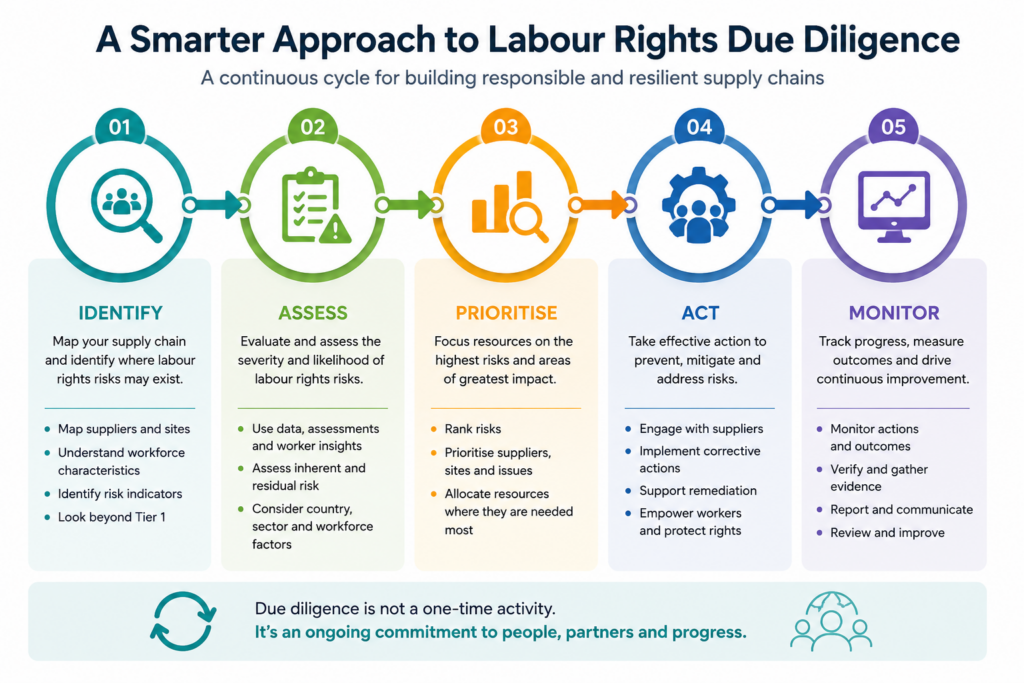
Instead of discovering a problem when an audit fails, or an allegation reaches the headlines, companies can build a clearer picture of where vulnerabilities exist. That visibility can also help organisations respond more effectively when regulations, customers or stakeholders ask difficult questions.
The next phase of responsible sourcing
The conversation around labour rights in supply chains is changing. It is moving beyond policies and annual statements towards traceability, evidence and ongoing risk management.
The EU Forced Labour Regulation is one clear example of that shift. From December 2027, products linked to forced labour can face exclusion from the EU market, making supply-chain understanding increasingly important for companies operating in or selling into Europe.
For businesses, the lesson is straightforward:
You cannot manage a supply-chain risk you cannot see.
The companies best prepared for the next phase of responsible sourcing will be those that can connect the information behind their supply chains, identify risks and demonstrate how they are responding.
CleanChain: Turning supply chain data into visibility
CleanChain helps organisations centralise and manage complex supply-chain compliance data, giving teams greater visibility across suppliers, products, sites and compliance activities.
Because when the pressure is on to demonstrate responsible sourcing, having the data is only the beginning. Knowing what it means is what matters.
Contact cleanchaininfo@adec-innovations.com