
Explore the ZDHC Brands to Zero 2026 findings, supplier chemical compliance gaps and how digital technology supports continuous improvement.
The latest ZDHC findings highlight significant progress in sustainable chemical management. But they also reveal an important challenge for brands: turning supplier compliance data into measurable improvement.
As apparel, textile, leather and footwear brands strengthen their chemical management requirements, greater attention is being placed on supplier transparency, chemical inventory reporting and evidence of compliance.
The ZDHC Brands to Zero 2026 Report shows that more brands are integrating sustainable chemical management into their operations and supply chains.
However, the findings also highlight a critical distinction: monitoring supplier chemical compliance is not the same as actively driving improvement.
For brands and manufacturers, this raises an important question:
Are you simply collecting chemical compliance data, or using that information to make better decisions across your supply chain?
ZDHC Brands to Zero 2026: What Has Changed?
The ZDHC Brands to Zero 2026 programme assesses how participating brands embed sustainable chemical management into their corporate policies, purchasing practices and supplier operations.
The 2026 findings demonstrate encouraging progress.
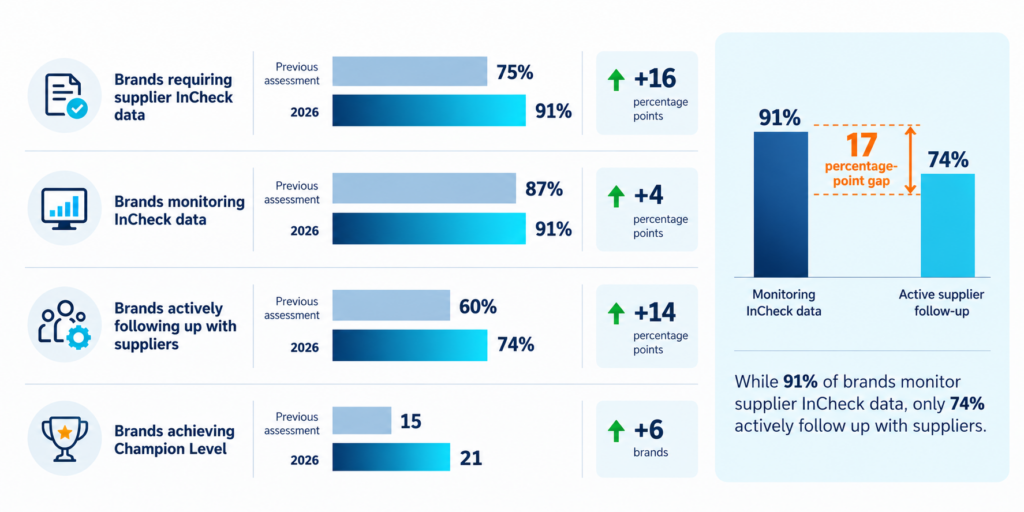
- 91% of assessed brands now require suppliers to provide ZDHC InCheck data, compared with 75% previously.
- 91% monitor supplier InCheck data, increasing from 87%.
- 74% actively follow up with suppliers, compared with 60% in the previous assessment.
- 21 brands achieved Champion Level, up from 15.
These findings indicate that sustainable chemical management is becoming more firmly embedded in brand supply chain operations.
More brands are establishing chemical management expectations, requiring supplier reporting and monitoring performance.
However, the results also highlight where further progress is needed.
The Gap Between Supplier Monitoring and Supplier Improvement
One of the most significant findings is the difference between brands monitoring InCheck data and those actively following up with suppliers.
While 91% monitor supplier chemical management information, only 74% report actively following up.
This 17-percentage-point difference highlights an important challenge.
Having access to chemical compliance data does not automatically translate into meaningful action.
For brands managing hundreds or thousands of suppliers, chemical management information may be distributed across different facilities, systems, reports and documents.
Even when suppliers submit monthly ZDHC Performance InCheck reports, brands still need to understand what that information reveals.
For example:
- Which suppliers are consistently meeting chemical management expectations?
- Where are gaps in chemical inventory conformance emerging?
- Which facilities require additional support or investigation?
- Are suppliers demonstrating improvement over time?
- Can chemical management performance be monitored consistently across the supply chain?
Answering these questions requires more than collecting reports.
It requires reliable chemical data, structured supplier performance monitoring and processes that support continuous improvement.
Why Chemical Data Quality Matters
Effective supplier chemical compliance begins with reliable information.
Safety Data Sheets (SDSs), chemical inventories, chemical formulation information and conformance records provide the foundation for understanding chemical use across manufacturing operations.
However, collecting documents does not necessarily mean that the underlying chemical data is complete, accurate or accessible.
Chemical information may be stored in different formats, maintained manually or distributed across individual facilities.
Inconsistent chemical names, missing CAS numbers, outdated SDS documents and incomplete inventories can make it difficult to establish a reliable picture of chemical use.
These challenges can affect an organisation’s ability to identify chemical risks, evaluate conformance and prioritise supplier improvements.
Moving from SDS documents to structured chemical intelligence
Digital chemical management provides an opportunity to transform chemical information into structured, usable data.
Instead of relying entirely on manual document reviews, technology can help extract and organise information such as:
- Chemical names and CAS numbers
- Hazard classifications and H-statements
- Chemical inventory details
- ZDHC MRSL conformance information
- Supporting certificates and documentation
When this information is connected to chemical inventories and reporting processes, organisations can improve data consistency and make chemical information easier to review and analyse.
The objective is not simply to collect more chemical data. It is to make existing information more reliable, accessible and actionable.
The Role of ZDHC InCheck Reporting in Continuous Improvement
ZDHC Performance InCheck reporting provides suppliers with a structured way to evaluate the conformance of their input chemical inventories against applicable ZDHC chemical conformance requirements.
For brands, InCheck reports provide valuable visibility into supplier chemical inventory performance.
For suppliers, monthly reporting supports ongoing monitoring of chemical inputs and opportunities for improvement.
However, reporting is only one part of effective chemical management.
The greater opportunity lies in using that information to identify trends, investigate non-conformities and support more informed chemical purchasing and management decisions.
For example, a supplier may identify chemical formulations that do not have the required conformance information.
The next step is to investigate those formulations, engage chemical suppliers, evaluate suitable alternatives where necessary and monitor progress through subsequent reporting periods.
This creates a more meaningful connection between ZDHC InCheck reporting, chemical management practices and continuous improvement.
How Digital Technology Supports Better Supplier Chemical Management
As supply chains become more complex, manual processes and disconnected information can limit visibility.
Digital chemical management software can help organisations establish more consistent processes for managing chemical information and supporting supplier performance monitoring.
1. Improve chemical inventory visibility
A structured digital chemical inventory provides a clearer view of chemicals used across manufacturing facilities.
By connecting chemical products with SDS information, supporting documentation and conformance data, organisations can reduce reliance on fragmented records.
This creates a stronger foundation for chemical management decisions.
2. Strengthen supplier performance monitoring
Brands need to understand more than whether a supplier has submitted a report.
They need visibility into chemical management performance, emerging risks and changes over time.
Digital dashboards and structured reporting can help organisations identify patterns, prioritise suppliers requiring attention and support more consistent performance reviews.
3. Support supplier engagement and follow-up
The ZDHC Brands to Zero 2026 findings reinforce the importance of supplier engagement.
Once performance gaps are identified, brands and suppliers need processes for communicating expectations, investigating issues and monitoring progress.
Digital workflows can support this process by organising supplier information, documenting assessments and improving visibility into follow-up activities.
4. Connect chemical management with environmental performance
Sustainable chemical management extends beyond chemical inventory reporting.
Chemical inputs, manufacturing processes and wastewater performance are interconnected.
Connecting chemical management information with wastewater testing and environmental reporting can help organisations develop a more comprehensive understanding of facility performance.
This supports a more integrated approach to environmental management and supply chain sustainability.
From Chemical Compliance Data to Actionable Visibility
The ZDHC Brands to Zero 2026 findings highlight an important direction for the industry.
Chemical management programmes are becoming more established, but the next stage of progress will depend on how effectively organisations use the information available to them.
For brands, this means moving beyond collecting supplier reports towards understanding performance, identifying improvement opportunities and supporting meaningful engagement.
For manufacturers, it means maintaining reliable chemical inventories, strengthening internal chemical management practices and using reporting information to guide decisions.
For both, digital technology can help bridge the gap between compliance requirements and operational improvement.
How CleanChain Supports Connected Chemical Management
CleanChain helps brands and manufacturers manage chemical information through a connected digital platform designed to improve visibility, data quality and reporting efficiency.
Its chemical management capabilities support organisations in:
- Managing chemical inventories: Organising chemical information, SDS documents and supporting records in a centralised environment.
- Automating SDS data extraction: Converting complex SDS information into structured chemical data to support more efficient inventory management.
- Supporting ZDHC InCheck reporting: Helping suppliers prepare chemical inventories and manage the reporting process through an approved Solution Provider.
- Improving chemical conformance visibility: Supporting the identification and review of chemical formulations against relevant requirements.
- Monitoring supplier performance: Providing reporting and data visibility to support chemical management oversight.
- Connecting environmental information: Supporting wastewater management and environmental reporting through complementary solutions and services.
By bringing chemical information into a more structured digital environment, CleanChain helps organisations move beyond fragmented documents and manual processes.
The result is a stronger foundation for supplier chemical compliance, informed decision-making and continuous improvement.
The Next Step for Sustainable Chemical Management
The ZDHC Brands to Zero 2026 Report demonstrates that the industry is making progress.
More brands are requiring chemical management data. More are monitoring supplier performance. And more are taking steps to engage suppliers.
But the findings also reinforce a fundamental principle:
Sustainable chemical management is not only about what organisations report. It is about what they do with the information.
As expectations for transparency, accountability and supplier performance continue to grow, organisations need reliable data and practical processes that turn chemical management information into meaningful action.
For brands and manufacturers, the opportunity is clear: move beyond compliance reporting towards connected chemical management that supports better visibility, stronger supplier engagement and measurable progress.
Ready to turn chemical data into actionable supply chain visibility?
Explore how CleanChain supports chemical inventory management, SDS automation, ZDHC reporting and connected chemical compliance.
CTA: Explore Connected Chemical Management
Source
ZDHC Foundation, Beyond Commitment: Why the Future of Sustainable Chemical Management Depends on Evidence and Action, 15 October 2026.