REACH Regulation FAQ: Understanding EU Chemical Compliance
What is REACH Regulation?
REACH stands for Registration, Evaluation, Authorisation and Restriction of Chemicals. It is the European Union regulation designed to protect human health and the environment from the risks associated with chemicals.
REACH Regulation applies to chemical substances used on their own, in mixtures and, in certain circumstances, to substances contained in articles such as clothing, furniture, electrical equipment and other consumer products.
Who does REACH Regulation apply to?
REACH establishes different obligations depending on an organisation’s role in the supply chain. These can include manufacturers, importers, downstream users and distributors of chemical substances and mixtures, as well as companies that produce or import certain articles.
The specific obligations depend on factors such as the substance, the quantity involved, how it is used and whether it is present in an article.
Does REACH Regulation apply to articles such as clothing and electrical products?
Yes. REACH Regulation primarily regulates chemical substances, but certain provisions also apply to articles, objects such as clothing, furniture, electrical equipment, footwear and other finished products.
Companies that manufacture or import articles may need to assess whether they contain substances subject to REACH requirements, including Candidate List SVHCs and restrictions under Annex XVII.
What are the REACH registration requirements?
Companies are generally responsible for registering substances they manufacture or import at 1 tonne or more per year, subject to applicable exemptions and specific REACH regulations rules.
Registration involves submitting information to the European Chemicals Agency (ECHA) about the substance’s properties, uses and, where relevant, the risks associated with its use.
The information requirements increase according to the applicable tonnage band. A Chemical Safety Report is generally required for substances registered at 10 tonnes or more per year per registrant.
What are Substances of Very High Concern (SVHCs)?
Substances of Very High Concern (SVHCs) are substances identified under REACH regulation because they may pose serious risks to human health or the environment.
When a substance is added to the Candidate List, specific obligations can arise for companies supplying the substance or articles containing it. These can include communication, information and notification requirements.
The Candidate List is updated over time, so organisations need to monitor changes and assess how newly listed substances may affect their products and supply chains.
What is the 0.1% SVHC threshold?
For articles, REACH Article 33 requirements generally apply where a Candidate List SVHC is present at a concentration above 0.1% by weight (w/w).
Where this threshold is exceeded, suppliers of the article must provide recipients with sufficient information to allow safe use of the article. Consumers can also request this information, and suppliers must respond within 45 days.
What is REACH Article 33?
Article 33 establishes communication requirements for articles containing Candidate List SVHCs above 0.1% w/w.
Suppliers must provide recipients with sufficient information to allow safe use of the article, including, as a minimum, the name of the substance.
Consumers also have the right to request information about SVHCs in articles. A response must generally be provided within 45 days of receiving the request.
What is REACH Article 7?
Article 7 addresses substances in articles and includes notification and registration requirements in specific circumstances.
For example, a producer or importer of articles may need to notify ECHA when a Candidate List SVHC is present in the articles at a concentration above 0.1% w/w and the total amount of that substance in those articles exceeds 1 tonne per producer or importer per year, subject to applicable exemptions.
Substances intended to be released from articles under normal or reasonably foreseeable conditions of use may also trigger registration requirements when the applicable conditions are met.
What are REACH Annex XIV and Annex XVII?
REACH Regulation uses different regulatory mechanisms to control substances of concern.
Annex XIV – Authorisation
Substances included in the REACH Authorisation List generally require an authorisation for specific uses after the relevant sunset date, unless an applicable exemption applies.
Companies using substances subject to authorisation need to determine whether their particular use is covered by an authorisation and comply with the relevant requirements.
Annex XVII – Restriction
Annex XVII contains restrictions on the manufacture, placing on the market and use of certain substances. Restrictions can apply to substances on their own, in mixtures or in articles, depending on the specific restriction.
Companies therefore need to assess their products and chemical uses against the applicable restriction conditions.
What are the responsibilities of manufacturers and importers?
Manufacturers and importers may have obligations to register substances, provide information about their properties and uses, assess potential risks and implement appropriate risk management measures.
For articles, manufacturers and importers may also need to assess whether specific requirements apply to substances contained in those articles, including Candidate List SVHC communication, notification or restrictions.
The exact obligations depend on the organisation’s role, the substance, quantities, uses and applicable REACH provisions.
What are the responsibilities of downstream users?
A downstream user is generally an organisation in the EU/EEA that uses substances or mixtures in its industrial or professional activities.
Downstream users need to ensure that their uses and conditions of use are covered by the information provided by their suppliers, including applicable exposure scenarios. They must also follow appropriate risk management measures and may have additional obligations where substances are subject to authorisation, restriction or other regulatory controls.
What are the responsibilities of distributors?
Distributors are responsible for maintaining the flow of relevant chemical safety information through the supply chain.
A distributor that only stores and distributes chemicals is not normally considered a downstream user, although distributors have their own information and communication obligations. If they undertake activities such as transferring or formulating chemicals, their role may change, and additional downstream-user obligations can apply.
Why is REACH compliance challenging for supply chains?
REACH compliance depends on having accurate and up-to-date information about substances, mixtures, chemicals, suppliers, products and uses.
For organisations managing complex supply chains, this information may be distributed across suppliers, spreadsheets, SDS files and different internal systems. Keeping information current as Candidate List substances, restrictions and authorisation requirements change can make ongoing compliance difficult.
How can SDS data support REACH compliance?
Safety Data Sheets (SDSs) contain important information about chemical composition, hazards, classification, handling and regulatory requirements.
Structuring SDS data can help organisations identify relevant substances, review chemical inventories, connect chemical information to suppliers and products, and support regulatory assessments.
However, an SDS alone does not demonstrate full REACH compliance. Organisations need to consider the wider REACH requirements applicable to their role, substances, products and uses.
How can structured chemical data help with REACH?
Effective REACH management requires more than storing documents. Organisations need to connect information about chemicals, substances, suppliers, products, SDSs and regulatory requirements.
Structured chemical data can make it easier to identify substances of concern, assess products against relevant requirements, monitor changes and provide the information needed for supply-chain communication.
How often does REACH Regulation change?
REACH Regulation is an evolving regulatory framework. The Candidate List, Authorisation List and restrictions can change as substances are evaluated and regulatory decisions are adopted.
Organisations should therefore have processes to monitor regulatory developments and assess how changes may affect their chemicals, products and supply chains.
How can CleanChain help organisations manage REACH-related chemical data?
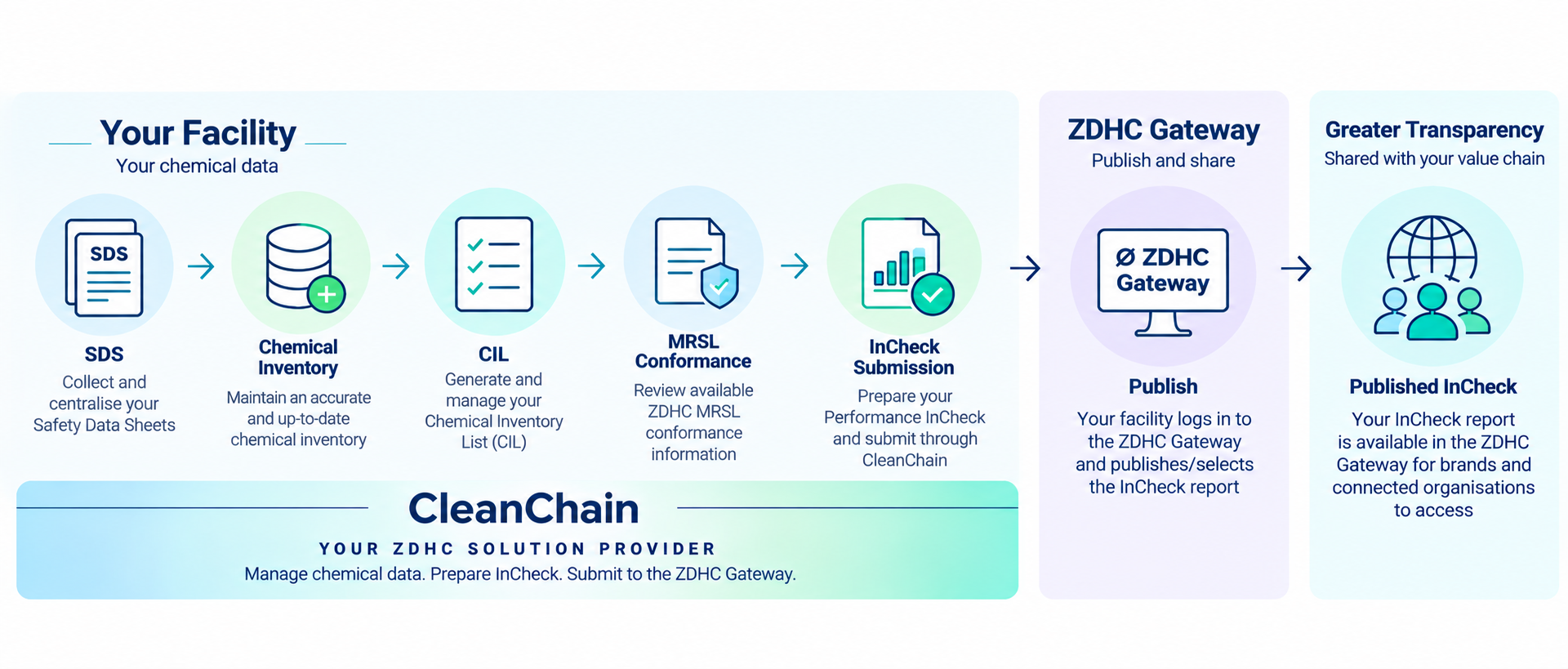
CleanChain helps organisations centralise and structure chemical, supplier, product and SDS data in one platform.
By bringing chemical information together, organisations can improve visibility across their supply chain, identify substances of concern, support compliance assessments and maintain more reliable data for reporting and decision-making.
CleanChain’s SDS Tool can help automate the extraction and structuring of key information from Safety Data Sheets, helping organisations reduce manual data entry and improve the accessibility of chemical information.
Can CleanChain certify REACH compliance?
CleanChain is a data and chemical management platform, not a regulatory authority or certification body.
The platform can help organisations organise and analyse the chemical and product information needed to support REACH regulation related processes, but organisations remain responsible for determining and meeting the specific legal obligations that apply to them.
For complex or specific regulatory questions, organisations should seek advice from an appropriately qualified REACH regulatory specialist.
Is REACH compliance a one-time exercise?
No. REACH compliance requires ongoing monitoring and management.
As substances are added to the Candidate List, Authorisation List or restrictions under Annex XVII change, organisations need to assess whether those changes affect their chemicals, products, suppliers or uses.
Maintaining structured, current chemical data can make this ongoing assessment significantly more manageable.