
Support your Road to Zero journey with CleanChain’s ZDHC reporting solutions.
Data Challenges on the Road to Zero
In the pursuit of sustainability, each step forward marks a significant triumph. Yet, amidst these victories, there are hurdles that can impede progress. For brands aspiring to join the esteemed ranks of the Brands to Zero Programme, the journey towards a more sustainable future is often obstructed by complexities in data management and reporting.
Are you a ZDHC Brand feeling overwhelmed by the annual assessment process on the Road to Zero? You’re not alone. Every year, brands like yours undergo rigorous evaluations based on ZDHC-set Key Performance Indicators (KPIs).
The ZDHC 2023 report illuminates the remarkable progress achieved by the Brands to Zero Programme, with 36 leading brands spearheading the charge. Undoubtedly, the path towards sustainability is well underway. However, for many, navigating this path is fraught with obstacles, particularly concerning the intricacies of data management and reporting.
Building on this progress, the ZDHC 2025 Road to Zero Progress Report highlights continued industry momentum, with increased adoption of ZDHC solutions, improved MRSL conformance, expanded wastewater monitoring, and greater transparency across global supply chains. The report also demonstrates how brands and suppliers are using digital platforms to strengthen collaboration, improve data quality, and measure progress towards the Road to Zero. These developments reinforce the growing need for organisations to move beyond manual processes and adopt digital solutions that simplify compliance, enhance reporting, and support continuous improvement.
In the realm of sustainable chemical management, the imperative to reduce industry emissions by 45% necessitates improvements in production practices and investments in better chemistry.
Yet, one of the primary pain points encountered by sustainability champions is the daunting task of comprehending and interpreting generous amounts of data. Despite possessing subject expertise and access to critical data, extracting meaningful insights remains a formidable challenge.
Moreover, the ongoing battle of maintaining regular reporting, monitoring, and data snapshots for annual disclosure adds another layer of complexity.
But amidst these challenges, there lies an opportunity for innovation and progress.
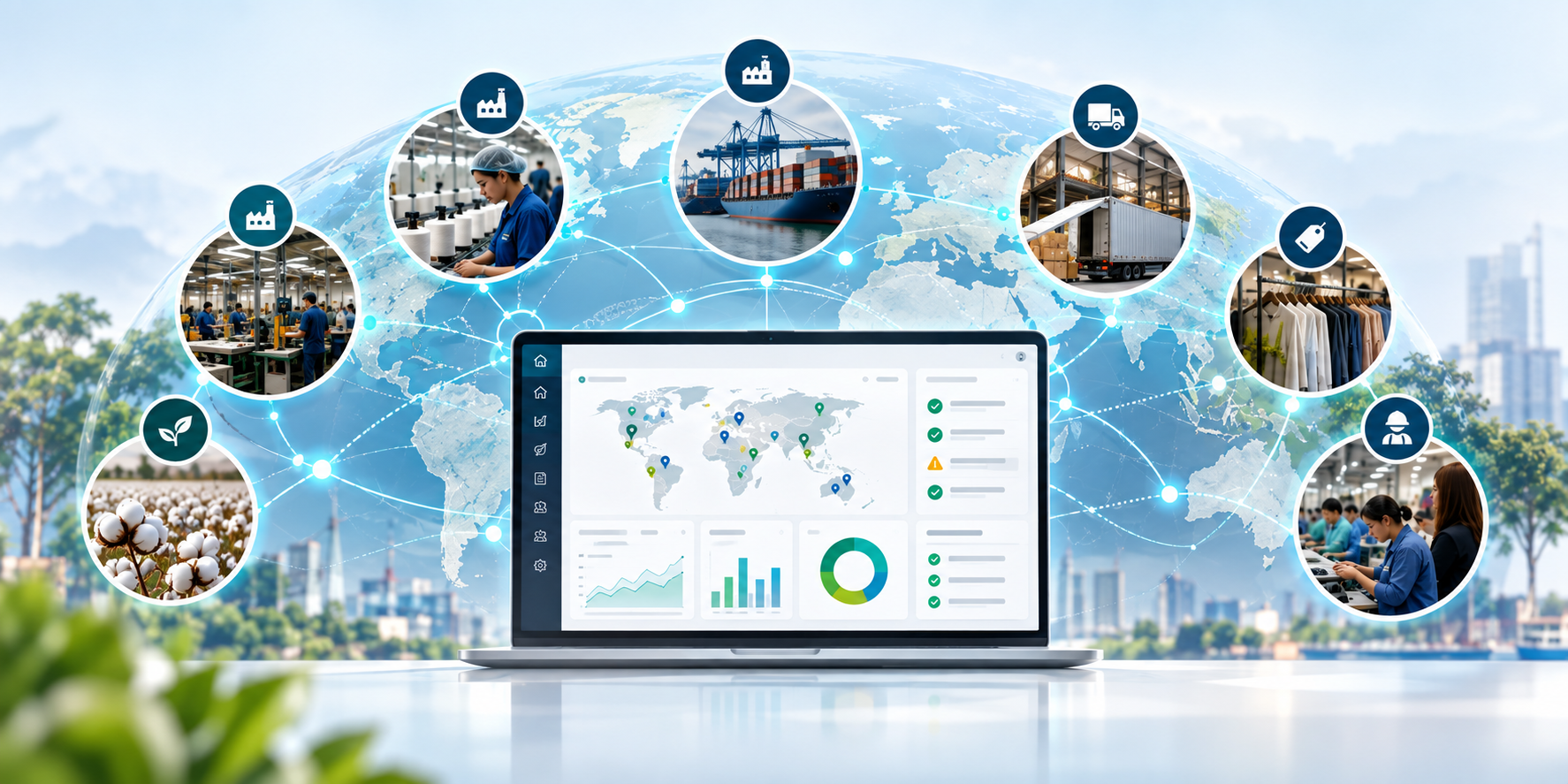
The CleanChain Compass tool offers an intuitive way to visualise data for easy monitoring across Supply Chain, InCheck, and ClearStream themes. It calculates comprehensive performance scores, providing weighted scores for suppliers and the overall supply chain to create detailed scorecards. Additionally, it captures data points monthly based on the Key Performance Indicators (KPIs) established for Supply Chain Performance (SCP) themes, ensuring a consistent and thorough evaluation of your supply chain’s efficiency and sustainability on the Road to Zero.
Beyond performance monitoring, CleanChain Compass provides powerful business intelligence dashboards that transform complex supply chain data into clear, actionable insights. The intuitive dashboards enable brands to identify trends, emerging risks, and opportunities for improvement in real time. Customisable visualisations and reporting allow users to benchmark supplier performance, prioritise corrective actions, and measure progress against sustainability objectives. By centralising critical supply chain data into a single view, Compass empowers teams to make faster, data-driven decisions while strengthening supplier engagement and supporting continuous improvement across chemical management and sustainability programmes.
John Lewis transformed its day-to-day chemical management operations by implementing CleanChain as a centralised platform for supplier collaboration, compliance monitoring, and data management. Instead of relying on manual spreadsheets and fragmented communication, the team gained real-time visibility into supplier chemical inventories, ZDHC MRSL conformance, and compliance progress across the supply chain. Automated workflows reduced administrative effort, accelerated supplier engagement, and provided consistent, accurate data for reporting and decision-making. With CleanChain, John Lewis improved operational efficiency, strengthened supplier accountability, and established a more proactive approach to managing chemical compliance and sustainability performance across its sourcing network. Read the case study
Contact us to assist you on your Road to Zero cleanchaininfo@adec-innovations.com.