
Your chemical data is likely incomplete and that creates hidden compliance risk across your supply chain.
In most organisations, chemical compliance feels under control on the surface. There are spreadsheets, supplier declarations, Safety Data Sheets (SDS), and internal tracking systems in place. But beneath that structure, a critical issue is often overlooked:
Your chemical data is probably incomplete.
And in the regulatory and supply chain environment, incomplete data is no longer just an operational gap, it is a business risk.
The Hidden Problem Behind Chemical Data
Chemical information is rarely managed in one place. Instead, it is spread across:
- Supplier emails and attachments
- Outdated spreadsheets
- Multiple versions of SDS documents
- Disconnected ERP systems
- Manual internal tracking files
Individually, each piece may seem manageable. Together, they create fragmentation.
This fragmentation leads to one core issue: no single source of truth for chemical data.
As a result, organisations often operate with assumptions rather than certainty when it comes to compliance, safety, and environmental reporting.
Why Incomplete Chemical Data Is a Growing Risk
Incomplete chemical data is not just an administrative challenge, it has real consequences across the supply chain.
1. Compliance Exposure
Without complete and verified chemical records, organisations risk:
- Failing MRSL or regulatory requirements
- Inaccurate compliance reporting
- Audit failures
- Delays in certification processes
2. Supplier Blind Spots
Many companies lack visibility beyond tier-1 suppliers. This means:
- Hidden chemical risks in upstream suppliers
- Inconsistent SDS quality across regions
- Limited traceability of chemical inputs
3. Operational Inefficiency
Teams spend significant time:
- Chasing missing SDS documents
- Manually updating records
- Reconciling inconsistent data
- Preparing audit packs under pressure
This slows down decision-making and increases administrative burden.
4. ESG Reporting Inaccuracy
Sustainability reporting depends on accurate chemical and supplier data. Incomplete inputs lead to:
- Inconsistent ESG metrics
- Weak audit trails
- Reduced credibility in sustainability disclosures
The Shift: From Data Management to Risk Reduction
Traditional chemical management systems focus on storing information. But storage alone does not solve the problem.
The real need is to shift the approach: From managing chemical data to reducing chemical and compliance risk.
This is where digital transformation becomes critical.
CleanChain: Turning Chemical Data Into Risk Intelligence
CleanChain is designed to address the root of the problem, not just the symptoms.
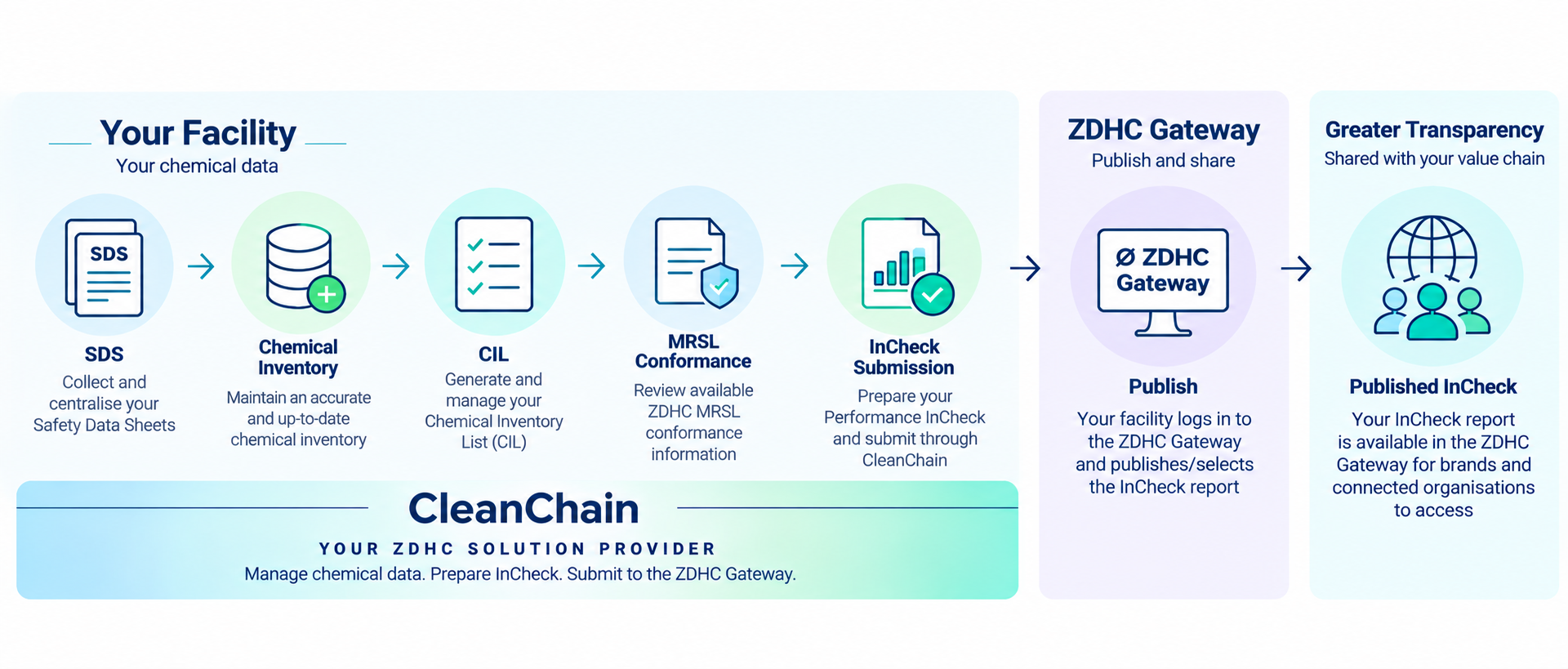
Instead of relying on fragmented data sources, CleanChain centralises and structures chemical information across the supply chain.
It functions as risk reduction technology, helping organisations move from uncertainty to control.
What Risk Reduction Looks Like in Practice
By digitising chemical management, organisations can:
1. Establish a Single Source of Truth
All chemical data including SDS, formulations, and supplier information is centralised in one system.
2. Improve Supplier Transparency
Gain visibility into chemical data across suppliers and production sites, reducing blind spots in the supply chain.
3. Strengthen Compliance Readiness
Ensure data is structured, traceable, and audit-ready at all times not just during reporting cycles.
4. Reduce Manual Workload
Automate repetitive tasks such as data collection, validation, and reporting preparation.
5. Enable Faster, Data-Driven Decisions
With accurate and accessible information, teams can respond quickly to compliance and sustainability requirements.
Why This Matters Now
Regulatory expectations are increasing, not slowing down. At the same time, supply chains are becoming more complex and geographically distributed.
In this environment, incomplete chemical data is no longer acceptable.
Organisations that continue relying on manual or fragmented systems will face:
- Higher compliance risk
- Slower supplier onboarding
- Increased audit pressure
- Reduced competitiveness in ESG-driven markets
Chemical data is often treated as an administrative requirement. But in reality, it is a strategic asset or a strategic risk.
If your organisation cannot confidently answer whether its chemical data is complete, accurate, and up to date, then the risk is already present.
The question is no longer whether chemical management needs to change.
It is how quickly you can move from fragmented data to structured risk reduction.