
The Ecodesign for Sustainable Products Regulation (ESPR) has introduced the Digital Product Passport framework.
The textile specific delegated acts, including the exact data requirements, are still being finalised. However, the direction is clear. Structured and verifiable sustainability data will be required for priority product categories such as textiles. For companies managing complex global supply chains, this represents a decisive change moving chemical information out of siloed spreadsheets and into accessible, auditable digital systems.
Chemical data is moving out of filing cabinets and into regulated digital infrastructure, and for many organisations, that is where the pressure begins.
Chemical Transparency Moves to the Forefront with Digital Product Passport
Environmental disclosure requirements are tightening across Europe. Under the European Sustainability Reporting Standards (ESRS E2 – Pollution), companies must demonstrate control over pollution risks, including hazardous substances, wastewater discharge, and regulatory compliance.
Regulators are no longer satisfied with high-level policies. They expect structured, facility-level, cross-referenced, accurate, verifiable, transparent, consistent, traceable, and audit-ready data.
However, the regulatory direction is unmistakable: transparency, traceability, and verifiable sustainability data will be the new standard. Brands that start preparing their chemical data now will be best positioned to meet future obligations, reduce compliance risks, and enhance trust with consumers and partners.
The Consequences of Fragmented Data
Even before digital product passport obligations are finalised, many organisations face current risks in chemical data management:
- No consolidated, structured dataset
- Limited visibility of Substances of Concern across facilities
- Manual, time-consuming audit preparation cycles
- Heightened exposure to regulatory scrutiny
A static PDF may satisfy today’s filing requirements, but it will not satisfy tomorrow’s requirements.
From Compliance Burden to Strategic Control
Forward-looking brands are treating this regulatory shift as an opportunity to modernise chemical management systems. By digitising and structuring chemical data, organisations can:
- Shorten audit preparation cycles
- Improve supplier accountability
- Strengthen ESRS E2 reporting
- Reduce regulatory and reputational risk
- Prepare for forthcoming DPP delegated acts
Chemical transparency becomes more than a compliance requirement, it becomes a strategic business advantage. With accurate, centralised data, brands can improve supply chain visibility, support sustainability claims with confidence, respond more effectively to customer and regulatory requests, and build a trusted foundation for Digital Product Passports, enabling greater product transparency, operational efficiency, and long-term resilience.
The Structural Shift Ahead
The digital product passport signal a broader transformation in sustainability reporting, one that prioritises structured, connected data over static documentation.
Brands that act early to centralise, structure, and verify chemical information will be better positioned as regulatory timelines tighten.
Download the free Digital Product Passport Readiness Checklist to evaluate your apparel brand’s preparedness for DPP requirements, supply chain transparency, and compliance.
The Digital Product Passport (DPP) Readiness Checklist is a practical self-assessment designed to help apparel brands evaluate their preparedness for future DPP requirements. It assesses key areas including product and material transparency, chemical compliance, supplier traceability, environmental performance, and data management. In just a few minutes, the checklist helps identify strengths, uncover potential gaps, and highlight the actions needed to build a trusted data foundation for Digital Product Passport readiness.
About CleanChain
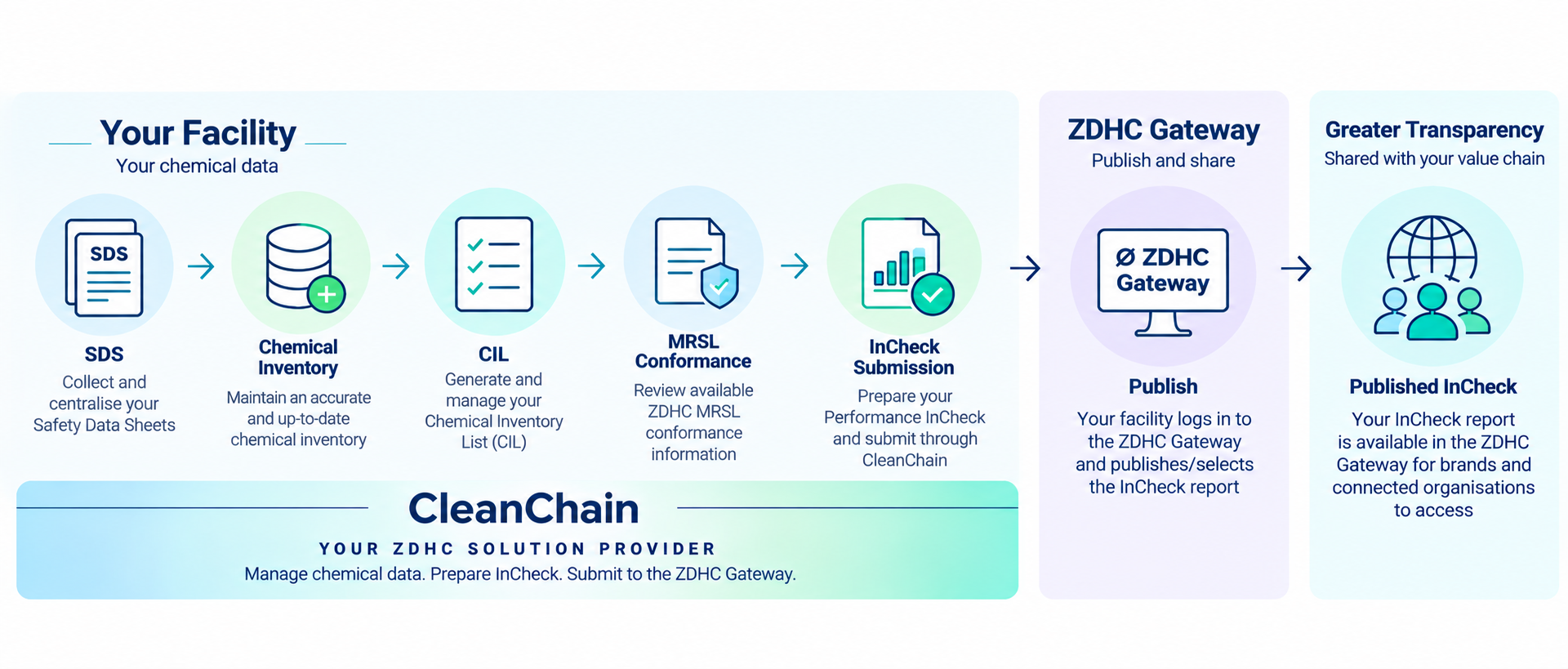
CleanChain is a leading chemical management and supply chain compliance platform that helps apparel brands, retailers, and manufacturers improve chemical transparency, strengthen supplier collaboration, and meet evolving regulatory requirements. By centralising chemical inventories, Safety Data Sheets (SDS), ZDHC MRSL conformance data, supplier information, and environmental performance in a single platform, CleanChain enables organisations to reduce compliance risks, improve operational efficiency, and build the trusted data foundation needed for Digital Product Passport (DPP) readiness and more sustainable supply chains.
Take the Next Step with CleanChain
Book a 30-minute consultation for readiness assessment and best practice guidance: cleanchaininfo@adec-innovations.com