
Prepare your apparel brand for Digital Product Passports (DPP). Learn why clean, connected supply chain data is essential for compliance and transparency.
The apparel industry is entering a new era of transparency. As consumers, regulators, and investors demand greater visibility into how products are made, brands are being asked to provide more detailed information about their products than ever before.
One of the most significant developments driving this change is the Digital Product Passport (DPP).
While many apparel brands have heard of DPPs, few fully understand what they are, what data they require, and how to prepare for them. The reality is that Digital Product Passports are not simply another reporting requirement they represent a fundamental shift in how product information is collected, managed, and shared across the supply chain.
The question is no longer whether Digital Product Passports will impact the apparel industry. The question is whether your organisation is ready.
What Is a Digital Product Passport?
A Digital Product Passport is a structured digital record, mandated under the EU’s Ecodesign for Sustainable Products Regulation (ESPR), that provides detailed information about a product throughout its lifecycle.
Designed to support the European Union’s sustainability and circular economy objectives, and introduced under the ESPR which entered into force on 18 July 2024. DPPs will enable stakeholders to access information about a product’s:
- Material and fibre composition by weight percentage
- Substances of Concern (SoC), including SVHCs
- Country of manufacturing for each processing stage
- Environmental footprint (carbon footprint, water consumption)
- Durability and care information
- Repairability and recyclability
- Supply chain traceability
The goal is to make product information more transparent, helping consumers make informed choices while enabling regulators and businesses to verify sustainability claims.
For apparel brands, this means being able to provide accurate, verifiable data on products and their supply chains.
Why Should Brands Care?
The apparel sector is one of the industries expected to be significantly affected by upcoming DPP requirements.
Fashion brands already face increasing pressure to demonstrate responsible sourcing, chemical compliance, environmental performance, and supply chain transparency. Digital Product Passports bring these expectations together into a single framework.
Brands that are unable to provide reliable product and supply chain information may face:
- Increased compliance risks
- Higher operational costs
- Difficulty meeting customer expectations
- Challenges entering regulated markets
- Greater scrutiny around sustainability claims
This scrutiny is not hypothetical. The EU Empowering Consumers for the Green Transition Directive (ECGT, Directive 2024/825) applies from 27 September 2026, prohibiting generic environmental claims and requiring that sustainability labels be based on third-party verified certification schemes. Brands making unsubstantiated claims to EU consumers already face enforcement action under existing consumer protection law.
On the other hand, brands that establish strong data foundations today will be better positioned to respond to future requirements and gain a competitive advantage.
The Biggest Challenge Isn’t Technology, It’s Data
When organisations first hear about Digital Product Passports, many assume they need a new technology platform.
In reality, the greatest challenge is data.
Critically, the DPP requires product-level data, not company-level averages. Each product placed on the EU market will need its own verifiable data set covering composition, chemical content, environmental footprint, and origin. This changes the scale of the data challenge significantly.
Most apparel brands already manage information across multiple systems, spreadsheets, supplier portals, certifications, audits, and compliance programmes. Critical information is often fragmented, outdated, or difficult to verify.
Questions many brands struggle to answer include:
- Which chemicals are used throughout our supply chain?
- Do we have current SDS documents for all chemical products?
- Which suppliers have verified ZDHC MRSL conformance?
- Can we easily access environmental performance data?
- Do we have complete visibility into our supplier network?
- Can we identify and disclose Substances of Concern (SoC) at product level?
Without reliable answers to these questions, building a Digital Product Passport becomes significantly more difficult.

Why Chemical Data Matters
Chemical transparency will play a central role in Digital Product Passports.
Brands will increasingly need access to accurate information about the substances of Concern (SoC) present in their products. Under ESPR, SoC disclosure is the only horizontal minimum information requirement, meaning it applies across all product groups. For textiles, this includes SVHCs under REACH, CLP-classified hazards, persistent organic pollutants (POPs), and substances that hinder reuse or recycling.
This requires robust foundational chemical data, including:
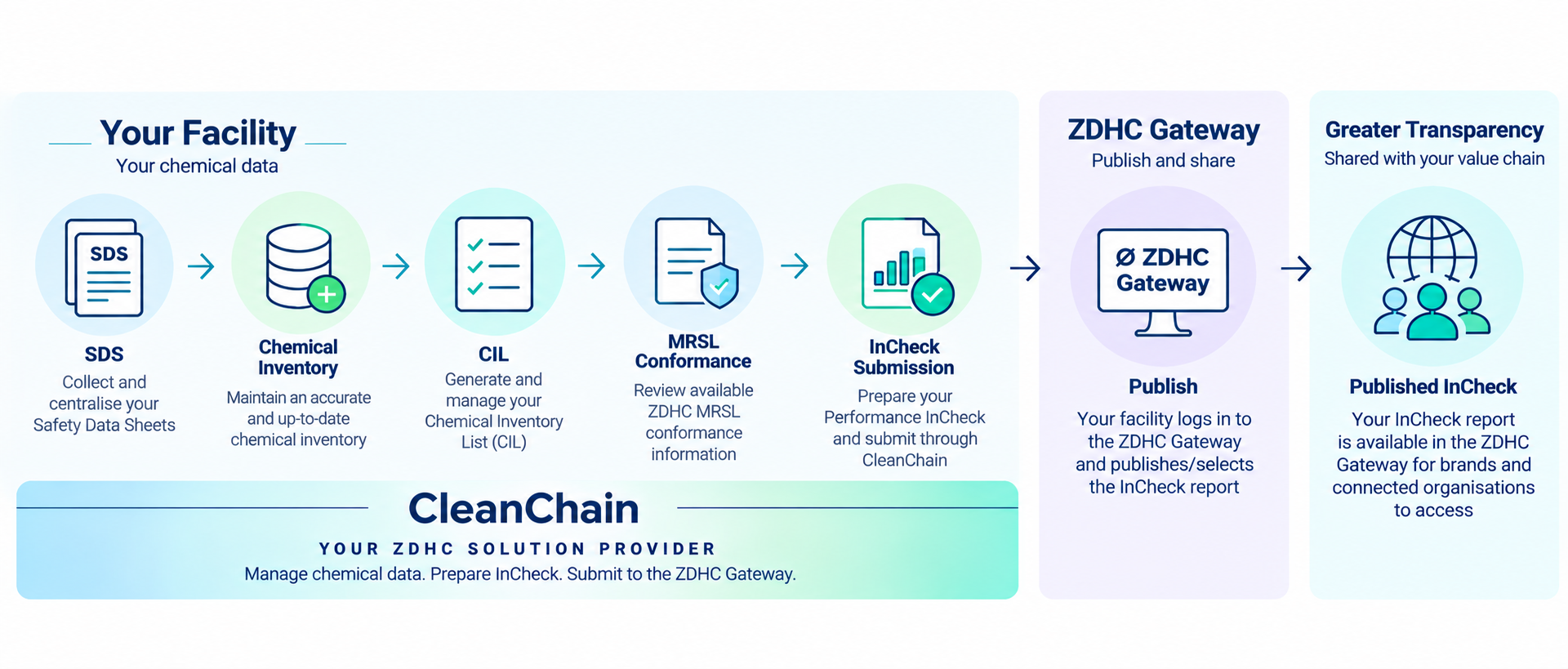
- Up-to-date Safety Data Sheets (SDS)
- Chemical Inventory Lists (CIL)
- MRSL conformance data
- Supplier chemical declarations
- Audit and verification records
Managing this information manually across hundreds of suppliers is both time-consuming and prone to error.
A centralised approach to chemical data management can help brands improve visibility, strengthen compliance, and prepare for future transparency requirements.
Supplier Engagement Will Be Critical
A Digital Product Passport is only as accurate as the data supplied by your supply chain.
Many apparel brands rely on hundreds or even thousands of suppliers across multiple countries. Gathering sustainability and compliance information from these suppliers can be a significant challenge. The DPP will require data from Tier 2 and beyond, including mills, dye houses, and chemical finishers, not just Tier 1 garment manufacturers.
Successful DPP preparation will require organisations to:
- Engage suppliers consistently
- Standardise data collection processes
- Verify supplier submissions
- Maintain current records
- Improve data quality over time
Brands that begin building these capabilities now will be better positioned as DPP requirements evolve.
Building the Foundation for DPP Readiness
Preparing for Digital Product Passports does not mean waiting for regulations to become mandatory.
Leading brands are already investing in the systems and processes needed to manage supply chain, chemical, and environmental data more effectively.
Key areas to focus on include:
Chemical Compliance
Maintain accurate chemical inventories, SDS documentation, and MRSL conformance data to support Substances of Concern (SoC) disclosure requirements under ESPR.
Supplier Transparency
Improve visibility into supplier performance and compliance activities across Tier 1 and Tier 2+ (mills, dye houses, finishers).
Environmental Data Management
Collect and centralise environmental performance information across facilities.
Data Quality and Accessibility
Create a single source of truth for sustainability and compliance information.
How CleanChain Supports DPP Readiness
While Digital Product Passports continue to evolve, one thing is already clear: trusted data will be the foundation of every successful DPP programme.
CleanChain helps apparel brands build that foundation by digitising and centralising critical sustainability and compliance information, including:
- Chemical inventory management
- SDS collection and management
- MRSL conformance data
- Supplier engagement and onboarding
- Environmental compliance reporting
- Supply chain transparency initiatives
By bringing supplier, chemical, and environmental data together in one platform, organisations can improve visibility, reduce manual processes, and strengthen their readiness Digital Product Passport requirements under ESPR. The same data infrastructure also supports entity-level Substances of Concern and environmental reporting obligations under CSRD/ESRS, meaning a single investment in data quality addresses both product-level and corporate-level compliance.
The Time to Prepare Is Now
Digital Product Passports are set to transform how apparel brands manage and share product information.
The textile delegated act under the ESPR is expected to be adopted in late 2026 or early 2027, with mandatory compliance approximately 18 months after adoption. While specific data requirements are being finalised, the need for accurate, verified, and accessible supply chain data is already here.
Brands that begin building strong data foundations today will be better positioned to meet future requirements, strengthen stakeholder trust, and support their sustainability goals.
Because when it comes to Digital Product Passports, success starts with the quality of the data behind them.
Contact us cleanchaininfo@adec-innovations.com